.svg)
Betting Retail Solutions: Omnichannel Technology Infrastructure for Physical and Digital Integration
By
SoftVault Team
April 22, 2026
•
14 min read
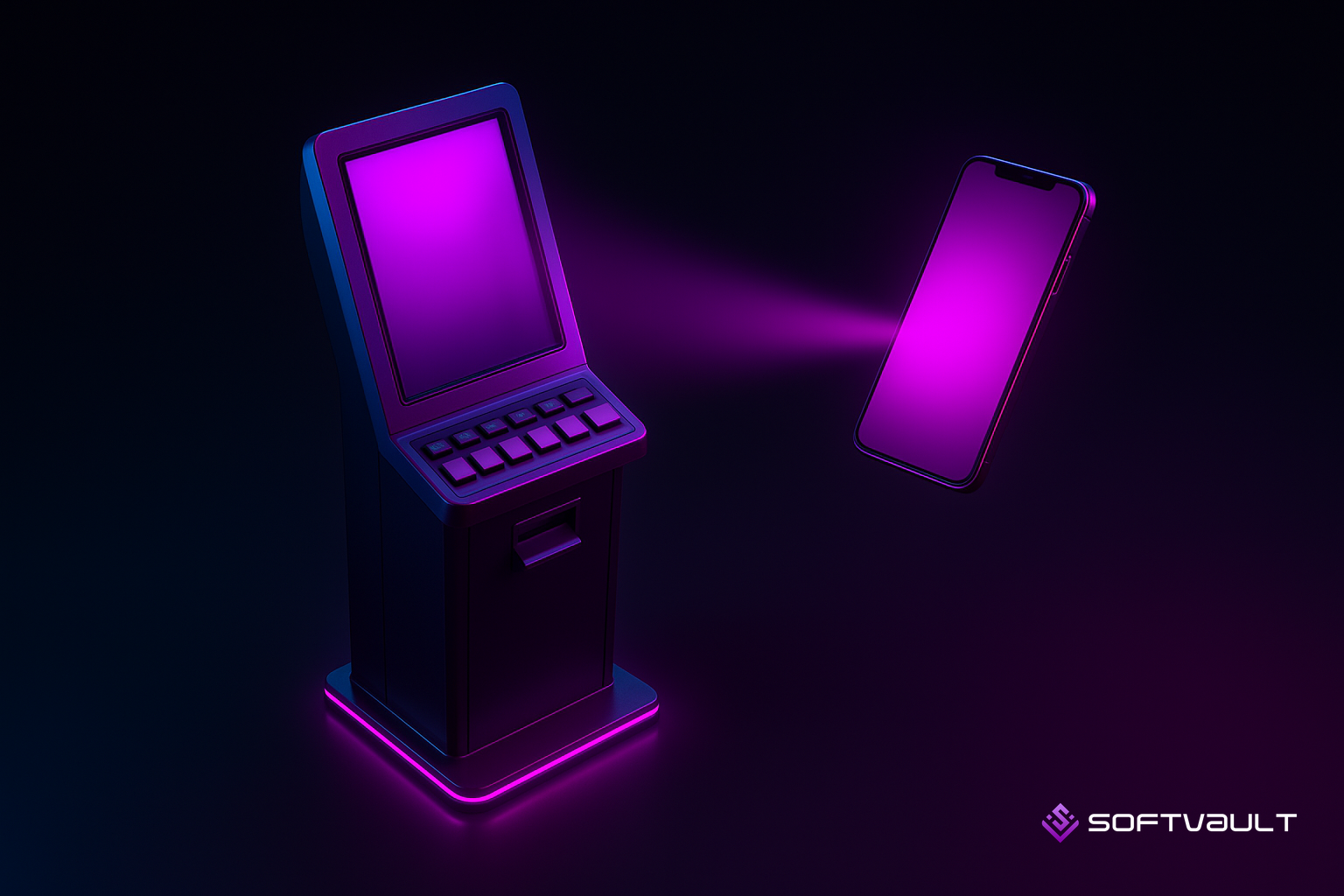
Retail betting operations persist despite dramatic online growth, generating billions in annual revenue through physical betting shops, terminals, and land-based casino sportsbooks. Modern betting retail solutions have evolved far beyond standalone terminals into sophisticated omnichannel ecosystems integrating physical and digital experiences. The convergence of retail and online betting creates opportunities for operators who can execute seamless cross-channel strategies.
Successful retail betting technology requires balancing multiple constraints - robust hardware surviving high-traffic environments, intuitive interfaces for diverse customer demographics, secure cash handling, and regulatory compliance across physical locations. Understanding the architectural requirements and operational considerations of retail betting infrastructure is essential for operators building or modernizing shop networks.
Self-Service Terminal Architecture
Self-service betting terminals represent the primary customer interface in modern betting shops. These kiosks must deliver reliability, security, and user experience quality while operating largely unsupervised in public environments.
Hardware Requirements and Specifications
Retail terminals face environmental stresses rarely encountered by consumer devices. Industrial-grade touchscreens must withstand constant use without calibration drift or touch sensitivity degradation. Commercial-duty thermal printers handle high-volume bet slip and payout ticket generation without jamming.
Cash handling hardware integrates note acceptors and coin mechanisms for deposits, bill dispensers for payouts. Anti-counterfeit detection systems validate currency authenticity automatically. Secure cash boxes with dual-key access prevent internal theft while facilitating cash collection processes.
Network connectivity requires redundancy for reliability. Primary ethernet connections provide optimal bandwidth and latency. Cellular backup connections maintain operations during internet outages. Local caching allows core betting functionality even when backend connectivity temporarily fails.
Physical security measures protect expensive hardware in public spaces. Reinforced enclosures resist vandalism attempts. Tamper detection alerts management to unauthorized access attempts. Asset tracking systems monitor terminal locations, preventing theft and enabling rapid recovery if terminals go missing.
User Interface Design for Retail Environments
Interface design for self-service terminals differs fundamentally from online betting applications. Customers span wide demographic ranges with varying technical proficiency. Elderly customers unfamiliar with touchscreens navigate alongside tech-savvy younger players.
Large touch targets prevent accidental selections. Buttons require 12-15mm minimum dimensions with adequate spacing preventing adjacent button misclicks. Simple layouts avoid overwhelming customers with too many simultaneous choices.
High contrast color schemes ensure visibility under varied lighting conditions - bright daylight through shop windows, dim lighting in casino environments. Text sizing accommodates vision-impaired customers without requiring accessibility features most won't know to activate.
Session timeouts protect customer privacy when terminals sit idle between uses. Automatic logout after 60-90 seconds ensures next customers don't access previous player accounts or see betting history.

Payment and Cash Handling Integration
Retail betting operates primarily on cash despite growing card and mobile payment adoption. Terminal software must coordinate sophisticated cash handling workflows.
Note acceptors validate currency, detect counterfeits, and determine denominations automatically. Software tracks inserted amounts, updates player balances in real-time, and secures bills in protected cash boxes. Error handling procedures guide players through jammed notes or rejected bills.
Payout processing calculates winning bet values, determines optimal bill denominations for payment, and coordinates bill dispenser operations. Insufficient cash alerts notify staff when dispensers run low, preventing customer service issues from empty terminals.
Card payment integration supports chip-and-PIN and contactless transactions. PCI DSS compliance requirements mandate encrypted payment data transmission and secure credential storage. Receipt printing provides transaction records for both cash and card operations.
Digital wallet integration increasingly matters as mobile payment adoption grows. QR code scanning allows customers to link mobile wallets to terminal sessions. Balance transfers between terminal sessions and mobile accounts enable seamless cross-channel experiences.
Omnichannel Account Integration
The true power of modern retail solutions emerges from seamless integration between physical and digital betting channels.
Unified Player Accounts
Single customer accounts span retail terminals, online web platforms, and mobile applications. Players deposit at terminals, bet online, and collect winnings at shops interchangeably. This requires sophisticated account synchronization ensuring consistent balances across all touchpoints.
Real-time balance synchronization prevents double-spending. When customers place online bets while retail terminals show their accounts, balance updates must propagate instantly. Event-driven architectures with message queues coordinate updates across distributed systems without race conditions.
Session management prevents customers from simultaneously betting across multiple channels using the same funds. Optimistic locking or distributed coordination ensures only one channel processes bets against available balances at any moment.
Betting history consolidation aggregates activity from all channels into unified views. Customers accessing bet history from any touchpoint see complete records regardless of where bets were originally placed. Back-office systems similarly provide staff with complete customer activity views for support and compliance purposes.
Cross-Channel Promotional Integration
Promotions spanning retail and online channels drive customer engagement and channel trial. Free bet offers earned through retail activity can be used online. Online customers receive notifications encouraging in-shop redemption of special offers.
Promotional engines track qualification and redemption across channels. Complex offer structures - "place three retail bets, receive online free spins" - require coordination between betting systems and promotional platforms. Real-time qualification checking provides immediate offer availability feedback regardless of channel.
Loyalty programs accumulating points from all betting activity encourage multi-channel engagement. Point balances update in real-time across touchpoints. Redemption options available at terminals, online, and through mobile apps provide flexibility accommodating customer preferences.
Sports betting solutions increasingly leverage location-based promotions. Customers near physical shops receive push notifications about in-store offers. Geofencing technology detects shop proximity, triggering contextually relevant promotions at optimal moments.
QR Code and Barcode Integration
QR codes bridge physical and digital experiences elegantly. Customers scan codes from terminals to receive betting recommendations on mobile devices. Conversely, mobile apps generate bet slips as QR codes for quick terminal scanning and placement.
Betslip transfer workflows allow customers to build complex accumulator bets online using full-featured interfaces, generate QR codes, and scan at terminals for instant placement. This combines online convenience with retail cash payment preferences.
Payout collection through QR codes eliminates physical ticket requirements. Online bet winnings generate QR codes customers scan at terminals for instant cash payout. This enables full remote betting with local cash collection, particularly valuable in markets where online payouts face regulatory restrictions.

Back-Office Management Systems
Retail operations require sophisticated administrative tools managing multi-location operations, inventory, staff, and regulatory compliance.
Terminal Management and Monitoring
Central management dashboards monitor terminal health across all locations. Real-time status displays show which terminals are online, offline, or experiencing issues. Alerts notify technical staff immediately when terminals fail, enabling rapid response.
Remote terminal configuration allows updating odds displays, promotional content, and system settings across all locations simultaneously. Scheduled updates deploy during off-peak hours minimizing customer disruption.
Performance analytics track usage patterns - peak hours, popular bet types, average transaction values. These insights inform staffing decisions, terminal placement optimization, and inventory management.
Cash level monitoring tracks bill dispenser and note acceptor status remotely. Predictive analytics forecast when locations will require cash replenishment based on historical patterns and upcoming events, optimizing cash-in-transit logistics.
Staff Management and Role-Based Access
Retail staff require various system access levels - cashiers processing payouts and deposits, shift managers accessing financial reporting, and administrators managing terminal configurations.
Role-based access control restricts functionality based on staff positions. Cashiers access customer service tools without viewing sensitive financial data. Managers access location-specific reporting without systemwide configuration permissions. Administrators maintain full access for technical management.
Activity logging maintains audit trails of all staff actions. Who accessed which customer accounts, processed which transactions, modified which settings - complete records support internal audits and fraud investigation. Regulatory compliance often mandates specific retention periods for these logs.
Scheduling integration coordinates staff shifts with predicted busy periods. Integration with payroll systems automates timesheet tracking. Performance dashboards highlight top-performing staff for recognition and identify training needs where performance lags.
Inventory and Supply Management
Retail betting operations consume significant supplies - betting slips, thermal printer paper, ink cartridges, and cleaning supplies. Management systems track inventory levels across locations, generate reorder alerts, and coordinate supplier relationships.
Automated reordering triggers when supplies fall below defined thresholds. Integration with supplier systems enables direct ordering through management interfaces without manual phone calls or emails.
Cost tracking by location reveals efficiency differences. Some shops might consume dramatically more supplies due to customer volume, equipment issues, or process inefficiencies. Comparative analytics identify optimization opportunities.
Financial Reconciliation
End-of-day financial closing procedures reconcile cash holdings against transaction records. Terminal-generated reports detail deposits, payouts, and theoretical cash balances. Physical cash counts compare against expected amounts, with variance reporting flagging discrepancies for investigation.
Multi-location consolidation aggregates financial performance across all shops. Corporate finance teams access consolidated views while location managers see only their own operations. Hierarchical reporting supports franchise or regional management structures.
Tax calculation and reporting varies by jurisdiction. Some markets tax retail betting differently than online. Automated tax engines calculate obligations correctly per location based on applicable regulations, generating required reports for regulatory filing.
Regulatory Compliance for Retail Operations
Physical betting locations face unique regulatory requirements beyond online operations.
Age Verification and Responsible Gambling
Physical location presence enables face-to-face age verification impossible online. Staff training programs ensure proper identification checking procedures. However, self-service terminals create verification challenges when customers use terminals without staff interaction.
Camera systems with age estimation algorithms flag potentially underage customers for staff verification. While not perfectly accurate, these systems reduce underage access risks while maintaining self-service convenience for obviously adult customers.
Self-exclusion programs often require cross-operator coordination. When players self-exclude, many jurisdictions mandate excluding them from all licensed betting locations, not just the operator where they requested exclusion. Central exclusion databases coordinate multi-operator exclusions, with facial recognition systems alerting staff when excluded players enter premises.
Reality check systems remind customers how long they've been gambling and how much they've spent. These features, mandated in many jurisdictions, must work across multiple terminal sessions - customers moving between terminals don't reset their timers.
Location-Based Restrictions
Many jurisdictions restrict betting shop proximity to schools, religious buildings, or residential areas. Location intelligence systems ensure proposed shop locations comply with distance requirements before property leases are signed.
Operating hours restrictions vary by jurisdiction. Some markets prohibit betting during specific hours - overnight, early morning, or during religious observances. Automated terminal lockouts enforce restrictions without requiring manual staff intervention.
Advertising restrictions near betting shops often exceed general marketing limitations. Visible signage must comply with size, content, and placement restrictions. Digital displays in shop windows face particular scrutiny in many markets.
Transaction Reporting and Anti-Money Laundering
Large cash transactions trigger reporting requirements. Automated systems track cumulative customer transactions across terminal sessions and days, generating alerts when reporting thresholds approach. Staff training ensures proper reporting procedures when thresholds exceed.
Licensing and regulation increasingly scrutinizes retail betting for money laundering risks. Customers making large deposits followed immediately by withdrawals without significant betting activity raise red flags. Automated monitoring systems identify suspicious patterns for investigation.
Security Systems and Surveillance
Video surveillance systems record all customer and staff activity. High-definition cameras with night vision capabilities maintain visibility during all operating hours. Retention requirements typically mandate 30-90 days of recording storage, though some jurisdictions require longer periods.
Integration between surveillance and betting systems allows correlating video footage with specific transactions. Disputed payouts, potential fraud, or security incidents benefit from easily retrieving relevant footage based on transaction timestamps and terminal locations.
Future-Facing Retail Technology
Retail betting technology continues evolving, incorporating emerging capabilities that enhance customer experiences and operational efficiency.
Biometric Authentication
Fingerprint and facial recognition systems eliminate physical cards or login credentials for account access. Customers identify themselves at terminals through biometric scans, improving convenience while enhancing security against account sharing or credential theft.
Privacy regulations require careful implementation. Biometric data storage and protection face strict requirements in many jurisdictions. Systems must provide clear consent mechanisms and data deletion capabilities when customers close accounts.
Contactless and Mobile Integration
NFC technology enables tap-to-bet workflows. Customers tap smartphones or smartwatches to terminals, authenticating instantly and accessing betting interfaces without manually logging in. This speed and convenience appeal particularly to younger demographics.
Mobile app integration allows phones to function as personal betting terminals. Customers use full-featured mobile apps to browse odds and build bet slips while in shops, then tap terminals to finalize placement and print physical tickets. This combines mobile interface advantages with retail payment and payout convenience.
AI-Powered Customer Assistance
Interactive assistant systems help customers navigate betting options, understand odds, and find specific events or bet types. Voice-activated interfaces particularly benefit older customers less comfortable with touchscreen navigation.
Personalized recommendations based on betting history suggest bets matching customer preferences. These AI-driven suggestions increase bet placement rates while improving customer satisfaction through relevant recommendations.
Virtual Sports and eSports Integration
Virtual sports - computer-simulated events with random outcomes - provide continuous betting action independent of real sports schedules. Retail terminals show virtual races and matches on integrated displays, creating engaging in-shop atmospheres.
eSports betting increasingly appears in retail locations targeting younger customers. Displays showing popular game tournaments with integrated betting create destinations for gaming-oriented demographics who might not visit traditional betting shops.
Integration with Payment Solutions
While cash dominates retail betting, digital payment integration expands customer options and reduces cash handling costs and risks.
Cryptocurrency integration creates interesting opportunities for retail. Bitcoin ATM functionality in betting terminals allows cryptocurrency deposits converting to local currency for betting. Similarly, winnings can convert to cryptocurrency for customer wallet transfers.
Frequently Asked Questions
How much do retail betting terminal solutions cost?
Basic self-service terminals start around $5,000-$8,000 per unit including hardware and software. Premium terminals with advanced cash handling, large displays, and biometric readers cost $12,000-$20,000. Software licensing adds $200-$500 monthly per terminal. Complete shop fitouts including multiple terminals, staff systems, and networking infrastructure range from $30,000 to $100,000+ depending on shop size and feature sophistication.
Can retail betting terminals integrate with existing online betting platforms?
Yes, modern retail solutions provide APIs enabling integration with any betting platform. Integration complexity depends on platform architecture - well-documented REST APIs allow relatively straightforward integration, while legacy systems with limited APIs require more custom development. Turnkey solutions often include both retail and online components pre-integrated.
What internet bandwidth is required for retail betting operations?
Minimum 10 Mbps download and 2 Mbps upload suffices for single-terminal operations. Multi-terminal shops should provision 25-50 Mbps depending on terminal count. Cellular backup connections require 4G LTE minimum, with 5G preferred for locations with many terminals. Load spikes occur during major events when many customers bet simultaneously.
How do retail betting shops handle equipment malfunctions?
Remote monitoring detects most issues before customers notice. Technical staff receive automated alerts enabling rapid response. On-site spare equipment - printers, cash acceptors, touchscreens - allows quick component swapping. Support contracts with hardware vendors typically guarantee 4-hour or next-business-day technician dispatch for issues requiring specialist repair.
What security measures prevent internal theft in retail betting operations?
Multi-layer security starts with role-based access limiting what staff can do. Cash handling requires dual custody - two staff members present during collection. Video surveillance records all cash handling. Transaction logs track every staff action. Regular surprise audits compare cash holdings against expected amounts. Variance investigation procedures address discrepancies before they become systematic.
Can customers use the same account across retail shops and online?
Yes, unified account systems allow seamless cross-channel experiences. Customers deposit at shop terminals, bet online, and withdraw winnings at any location. Real-time synchronization ensures consistent balances across all touchpoints. However, some jurisdictions regulate retail and online betting separately, potentially requiring separate account systems even for the same operator.
How do retail betting solutions handle peak traffic during major sporting events?
Capacity planning sizes terminal counts and network bandwidth for peak loads, not average traffic. Queue management systems provide estimated wait times. Staff augmentation during major events helps customers efficiently. Pre-built bet slip options for popular bets speed placement. Self-service terminals reduce staff bottlenecks compared to traditional counter-based service models.