.svg)
Live Casino Software Solutions: Streaming Infrastructure and Studio Operations for Real-Time Gaming
By
SoftVault Team
April 22, 2026
•
13 min read
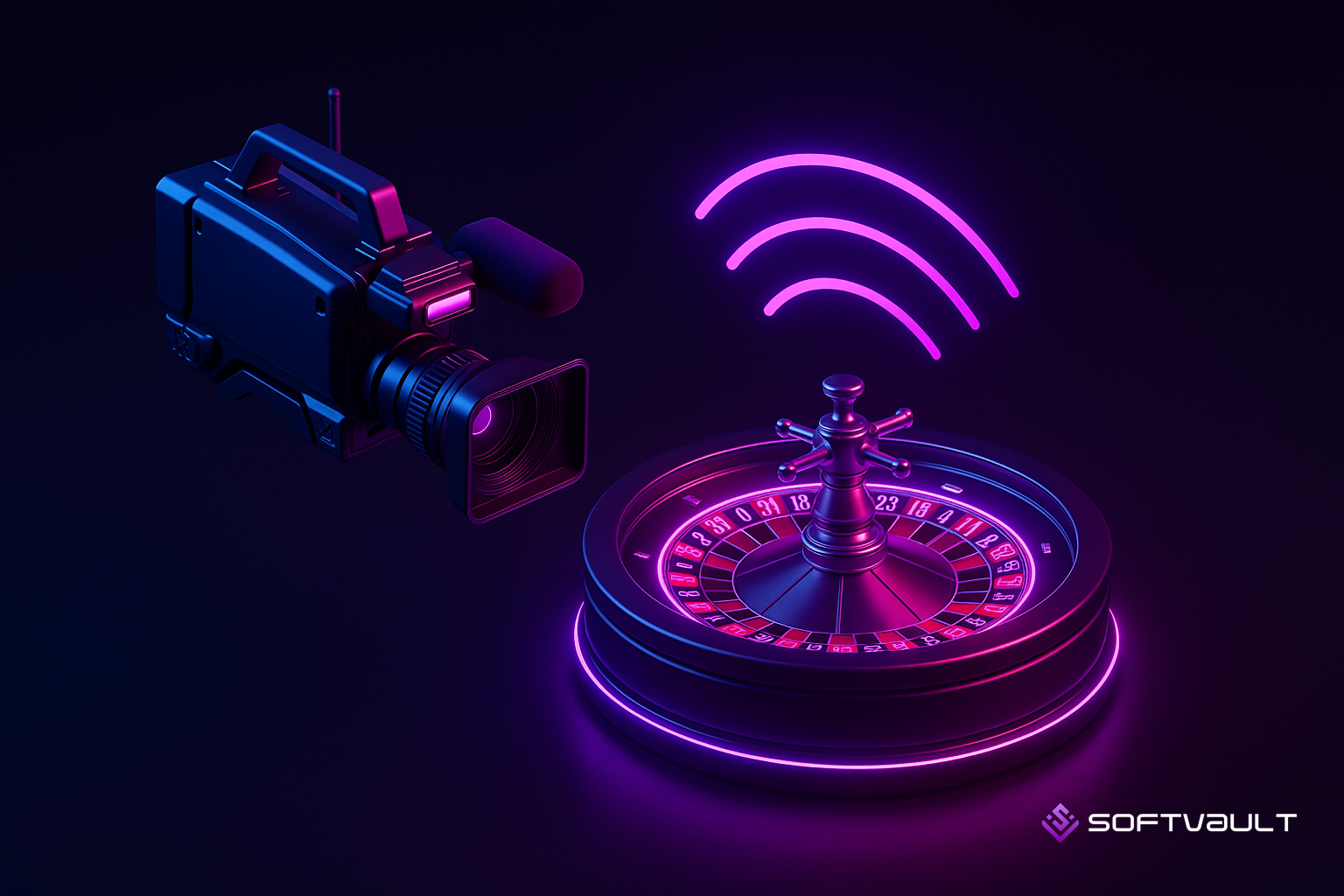
Live dealer casino gaming bridges the gap between online convenience and land-based authenticity. Players interact with real dealers managing physical cards, roulette wheels, and dice - broadcast in real-time through high-definition video streams. This creates engaging experiences commanding premium stakes compared to RNG-based casino games. Modern live casino software solutions orchestrate complex technical infrastructure spanning video production, streaming delivery, game logic processing, and multi-player coordination.
The technical demands of live casino operations differ fundamentally from traditional online gaming. Sub-second latency requirements, 24/7 production workflows, and real-time multi-player state synchronization create architectural challenges. Understanding the infrastructure requirements, operational considerations, and monetization strategies for live casino platforms is essential for operators evaluating this high-growth vertical.
Streaming Infrastructure and Video Delivery
High-quality video streaming forms the foundation of live casino experiences. Technical implementation determines player engagement, session duration, and ultimately revenue per customer.
Camera Systems and Production Equipment
Professional broadcast cameras capture dealer actions and game outcomes in detail. Multi-camera setups provide variety - overhead shots showing entire tables, closeups during card dealing, and wide angles establishing studio ambiance. Camera switching follows game flow automatically, showing relevant angles at appropriate moments.
High-definition video (1080p minimum, increasingly 4K) enables players to read cards and see game details clearly. Specialized cameras for overhead roulette shots use high frame rates capturing wheel spin clarity. Augmented reality overlays highlight bet areas, display game statistics, and present information without obscuring live action.
Lighting design creates studio ambiance while ensuring consistent video quality. Professional LED lighting systems eliminate flicker issues that plague consumer lighting. Color temperature consistency prevents visual fatigue during extended viewing. Lighting design balances aesthetic appeal with functional requirements for clear game element visibility.
Studio acoustics require careful design. Soundproofing prevents external noise intrusion. Acoustic treatment controls echo and reverberation, ensuring clear dealer audio. Directional microphones capture dealer speech while minimizing background noise from other tables operating simultaneously in open studio layouts.
Video Encoding and Compression
Raw video streams consume enormous bandwidth - 1080p video at 60fps requires 50+ Mbps uncompressed. Encoding with H.264 or H.265 codecs compresses streams to 3-8 Mbps without noticeable quality degradation. Hardware encoders provide lower latency than software encoding while supporting more simultaneous streams per server.
Adaptive bitrate streaming adjusts video quality dynamically based on connection speeds. Players on fast connections receive 1080p streams while those with slower connectivity step down to 720p or 480p automatically. This prevents buffering while maximizing visual quality for each player's circumstances.
Multiple bitrate profiles encode simultaneously - typically 480p, 720p, and 1080p variants. Content delivery networks cache all versions, delivering appropriate streams based on player bandwidth. Automatic quality switching during gameplay responds to changing network conditions without requiring manual player intervention.
Content Delivery Network Architecture
Global player distribution demands geographically distributed infrastructure. Content delivery networks deploy caching servers worldwide, delivering streams from servers closest to players. This reduces latency and improves stream reliability compared to centralized delivery from studio locations.
Multi-CDN strategies improve reliability through redundancy. Primary CDNs handle majority traffic while secondary providers activate when primary networks experience issues. Automated failover detects delivery problems and reroutes player streams without manual intervention.
WebRTC technology enables peer-to-peer streaming for certain scenarios, reducing server infrastructure costs. However, security and reliability concerns limit WebRTC adoption for premium live casino applications where consistent high-quality experiences justify centralized infrastructure costs.
Latency optimization remains critical - every second of delay between dealer actions and player visibility creates disconnect from live experience. Glass-to-glass latency under 1 second represents industry-leading performance. Achieving this requires optimizing encoding, network transmission, CDN routing, and player-side buffering simultaneously.
Game Logic and Player Interaction
While video provides visual representation, backend systems manage game state, bet processing, and payout calculation.
Optical Character Recognition and Game State Detection
Automated systems detect game outcomes through OCR and computer vision rather than requiring dealers to input results manually. Card recognition software identifies dealt cards automatically. Roulette wheel monitoring determines winning numbers from video analysis. Dice recognition captures outcomes in craps and sic bo.
OCR accuracy determines operational efficiency. 99.9%+ accuracy reduces human intervention requirements while maintaining game integrity. When recognition confidence falls below thresholds, systems flag outcomes for manual verification before processing payouts.
Redundant detection systems provide verification. Multiple cameras capture game events from different angles. Independent recognition systems analyze each feed. Results must agree across systems before acceptance - disagreement triggers manual review.
Bet Processing and Balance Management
Players place bets through graphical interfaces overlaying video streams. Chip selections, bet position clicks, and confirmation workflows must complete within game timing windows. User experience design balances speed with error prevention - too fast causes misplaced bets, too slow frustrates players missing betting windows.
Real-time balance updates reflect bet placements immediately. Backend systems coordinate with platform wallets, deducting bet amounts and crediting winnings atomically. Multi-player tables process dozens of simultaneous bets per game round, demanding efficient transaction processing without race conditions.
Bet history tracking maintains complete records - bet amounts, positions, timestamps, and outcomes. Players access recent bet history during gameplay. Support teams require comprehensive records for dispute resolution. Regulatory compliance mandates lengthy retention periods - typically 90 days minimum, often years.
Multi-Player Coordination
Unlike RNG casino games played individually, live dealer tables host multiple simultaneous players. Systems coordinate shared game state while providing individual player experiences.
Seat assignment allocates player positions at limited-seat games - seven seats at blackjack, unlimited players at baccarat or roulette. VIP seat reservation allows high-stakes players to guarantee availability at preferred tables during peak periods.
Chat functionality enables player interaction with dealers and other players. Moderation systems filter inappropriate language automatically. Human moderators handle edge cases and enforce community standards. Chat enhancement features like emoji reactions and pre-set messages accommodate international players with limited English proficiency.
Tipping mechanisms allow players to reward dealers. Virtual tips convert to real compensation for dealers, creating service incentives. Some operators pool tips across dealers, while others provide direct dealer attribution. Cultural norms vary dramatically - tipping is standard in some markets and rare in others.
Studio Operations and Dealer Management
Behind seamless player experiences lie complex operational workflows managing dealers, tables, and continuous production schedules.
Table and Game Management
Game variety requires multiple table configurations - different blackjack variants, European and American roulette, baccarat variations, poker variants. Table scheduling balances player demand against operational costs. Popular games run continuously on multiple tables while niche variants operate limited hours or activate on-demand.
Dynamic table allocation adjusts capacity based on real-time demand. Additional tables activate during peak hours or when specific games exceed capacity. Low-traffic periods consolidate players onto fewer tables, reducing operating costs while maintaining healthy player counts per table.
VIP tables offer premium experiences - higher betting limits, dedicated dealers, and exclusivity. Private tables serve whale customers or groups preferring isolated experiences. Some operators allow customers to customize table parameters - game rules, dealer preferences, and operating schedules for truly bespoke experiences.
Dealer Recruitment and Training
Dealer quality directly impacts player experience and retention. Recruitment prioritizes personality and communication skills alongside gaming competence. Engaging, personable dealers create entertaining experiences while professional demeanor maintains credibility.
Comprehensive training programs cover game procedures, payout calculations, studio equipment operation, and customer interaction skills. Mock production environments allow practice before live player exposure. Ongoing training addresses emerging situations and introduces new game variants.
Language capabilities matter for international operations. English remains the primary language, but dedicated tables in Mandarin, Spanish, German, and other languages serve specific markets. Multilingual dealers provide valuable flexibility.
Performance management tracks dealer metrics - game speed, error rates, player retention, and tip receipts. Top performers receive recognition and advancement opportunities. Underperformers receive additional training or transition to other roles.
Shift Scheduling and Workforce Management
24/7 operations demand sophisticated workforce management. Dealer scheduling balances coverage requirements against labor regulations - maximum shift lengths, mandatory breaks, and minimum rest periods between shifts.
Demand forecasting predicts required dealer capacity based on historical patterns and upcoming events. Major sporting events often correlate with increased live casino traffic as sports bettors explore casino games during match downtimes.
Automated scheduling systems generate optimized shift assignments minimizing overtime costs while ensuring adequate coverage. Self-service shift swapping allows dealers to trade assignments with approval workflows maintaining required coverage.
Quality Control and Compliance
Studio supervisors monitor tables continuously ensuring proper procedures. Multiple tables operating simultaneously require efficient monitoring tools - dashboard views showing all active tables, automated alerts for unusual situations, and quick access to detailed table views when intervention is needed.
Video recording archives all gameplay for regulatory compliance and dispute resolution. Retention requirements typically mandate 90-day minimum storage, though some jurisdictions require multi-year archives. Efficient compression and storage management contain infrastructure costs for massive video archives.
Game integrity monitoring detects anomalies suggesting cheating or equipment malfunctions. Statistical analysis flags unusual outcome distributions. Automated alerts trigger investigation when patterns deviate from expected probabilities beyond statistical norms.

Mobile and Multi-Platform Delivery
Live casino software must deliver consistent experiences across desktop, tablet, and smartphone platforms despite dramatically different screen sizes and network conditions.
Responsive Interface Design
Vertical smartphone screens present particular challenges for live casino interfaces. Video displays must remain visible while maintaining sufficient size for card and outcome visibility. Betting interfaces overlay or adjacent to video require careful design preventing accidental bets from touch interface imprecision.
Landscape orientation provides more screen space but not all players naturally rotate phones. Forcing orientation frustrates users. Optimal implementations support both orientations with adaptive layouts maximizing usability in each configuration.
Touch gesture optimization enhances mobile experiences. Pinch-to-zoom allows examining video details. Swipe gestures might navigate between camera angles. However, gestures must not conflict with essential betting interactions - accidental gestures during betting windows create frustration.
Native Mobile Applications
Native iOS and Android applications provide superior performance and features compared to browser-based implementations. Direct video decoding without browser overhead reduces latency and improves battery efficiency. Native video players provide better fullscreen experiences and adaptive bitrate handling.
Push notifications re-engage players with session reminders, table opening alerts for favorite games, or promotional offers for live casino play. Background audio continues when players minimize apps, allowing ambient casino atmosphere without maintaining visual attention.
Biometric authentication streamlines login for mobile users. Face ID and fingerprint sensors provide quick secure access without typing passwords on small keyboards.
Network Condition Optimization
Mobile players often experience variable network quality - switching between WiFi and cellular, moving through areas with weak coverage, or sharing bandwidth with other device users. Live casino software must handle these challenges gracefully.
Aggressive buffering provides playback continuity during brief connectivity interruptions. However, excessive buffering increases latency, diminishing live casino immediacy. Optimal implementations balance continuity against latency based on detected network stability.
Automatic quality scaling reduces bitrate when bandwidth drops. Seamless transitions between quality levels prevent buffering while maintaining best quality possible given current conditions. When quality drops below minimum acceptable thresholds, systems notify players recommending connection improvement before continuing play.
Integration with Platform Ecosystems
Live casino components must integrate seamlessly with broader casino platforms including RNG games, sportsbooks, and player account systems.
Unified Wallet and Bonus Systems
Single player balances spanning live casino and other products eliminate friction from fund transfers. However, casino software solutions must coordinate carefully - live casino bets cannot use bonus funds from RNG casino offers if bonus terms exclude live dealer games.
Wagering requirement tracking spans products when bonuses apply to multiple game types. Systems must attribute wagering contributions correctly - live casino typically contributes 10-20% toward requirements versus 100% for slots. Transparent reporting shows players remaining wagering requirements and game contribution rates.
Cross-Product Analytics and Personalization
Understanding player journeys across products reveals cross-selling opportunities. Players enjoying live blackjack might appreciate RNG blackjack recommendations for quick sessions when time-constrained. Conversely, RNG casino players might enjoy live dealer promotions offering authentic casino atmosphere.
Behavioral triggers identify optimal cross-product promotion timing. When sports betting players experience extended session gaps during off-seasons, live casino promotions provide alternative entertainment maintaining engagement.
Promotional Integration
Tournament systems create competitive experiences. Leaderboards track player performance across timed periods or game-count windows. Prize pools with graduated payouts incentivize participation. Real-time leaderboard updates visible during gameplay create excitement and encourage extended play to improve rankings.
Cashback offers specific to live casino encourage product trial from players primarily engaging with other verticals. Higher cashback rates for live casino than RNG games compensate for typically higher house edges in live dealer offerings.
Payment solutions integration ensures seamless deposit and withdrawal experiences. Players should access comprehensive payment options regardless of which product vertical they primarily engage with.
Frequently Asked Questions
How much does live casino software implementation cost?
White label live casino integration costs $10,000-$30,000 for basic implementations. Enterprise platforms with customization start at $50,000+. Studio setup for proprietary live casino operations requires $500,000-$2,000,000+ including facility construction, equipment, licensing, and staff recruitment. Most operators license existing live casino content rather than operating proprietary studios due to substantial infrastructure and operational costs.
What are typical revenue share rates for live casino content?
Content providers typically charge 10-20% of gross gaming revenue from live dealer games. Rates vary based on exclusivity, table customization, and operational support levels. Exclusive tables with dedicated dealers and custom branding command higher rates than shared tables with multi-operator access.
How does live casino latency impact player experience?
Every second of delay reduces immediacy and engagement. Sub-1-second glass-to-glass latency provides experiences approaching land-based casino immediacy. 2-3 second delays remain acceptable for most players. Latency exceeding 5 seconds significantly impacts retention and satisfaction. High-stakes players particularly sensitive to latency often abandon laggy tables.
Can operators customize live casino tables and dealers?
Customization levels depend on commercial arrangements. Basic integrations provide access to shared tables with provider branding. Mid-tier arrangements allow custom table backgrounds and branding elements. Premium dedicated tables offer complete customization - unique dealers, specialized games, custom rules, and full operator branding. Customization costs scale with exclusivity level.
What regulatory requirements apply to live casino operations?
Live casino faces similar licensing requirements as RNG casino operations. Additional considerations include dealer licensing and background checks, studio security and surveillance requirements, and game equipment certification. Some jurisdictions require studios to be located within licensed territories while others permit international studio operations serving local markets.
How do live casino solutions prevent cheating?
Multiple safeguards protect integrity - continuous video recording archives all gameplay, multiple camera angles provide comprehensive views, automated outcome detection requires consistency across independent recognition systems, supervisors monitor tables in real-time, and statistical analysis flags anomalous results. Regular equipment inspection and dealer rotation prevent collusion opportunities.
What makes some live casino providers better than others?
Quality differentiators include streaming reliability and latency, video quality, dealer professionalism and engagement, game variety and innovation, mobile optimization, and technical support quality. Leading providers like Evolution Gaming command premium pricing through superior execution across all dimensions while budget providers offer basic functionality at lower costs.