.svg)
Retail Betting Solutions: Complete Guide for Physical Betting Shops in 2026
By
SoftVault Team
February 18, 2026
•
26 min read
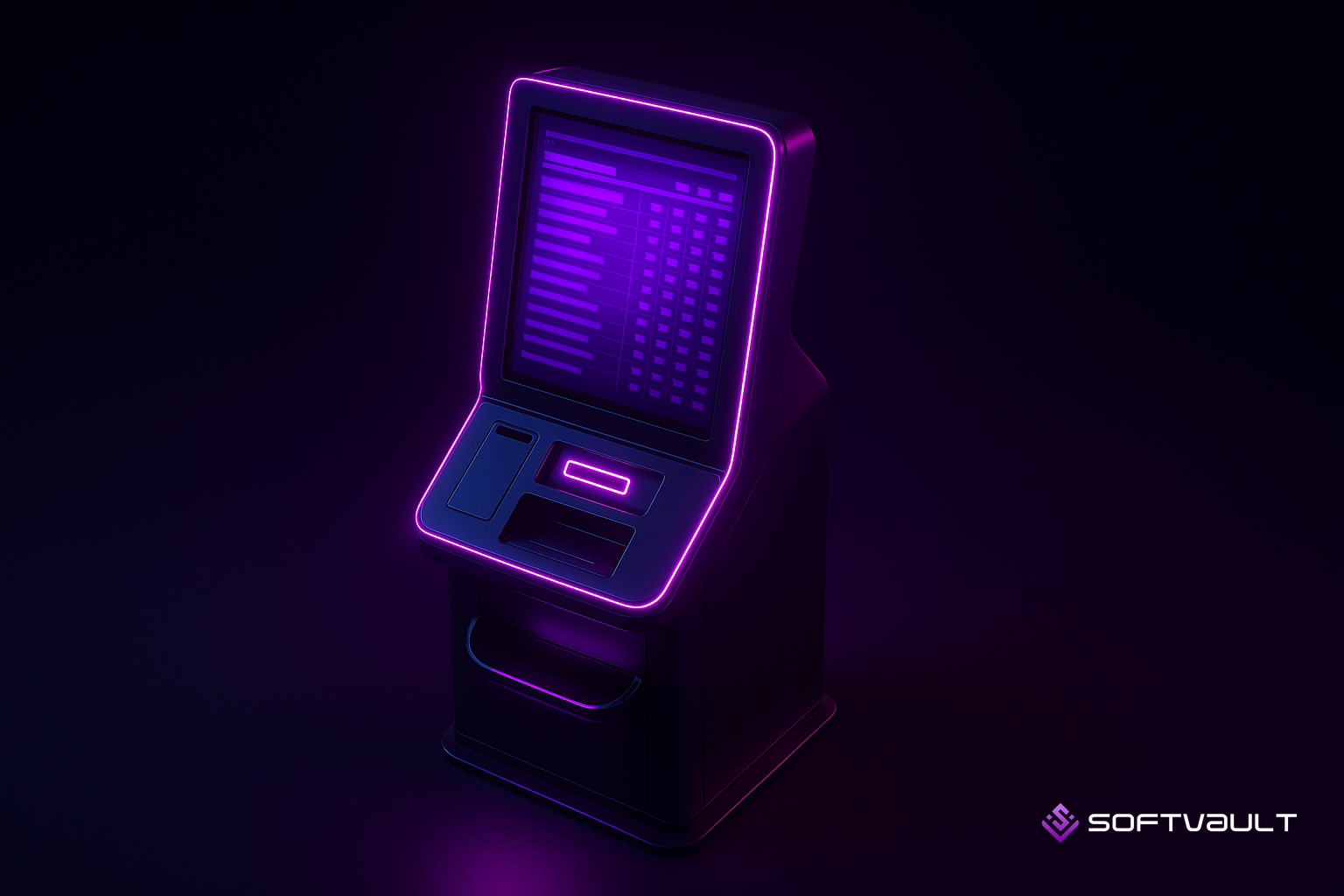
Physical betting shops generate $31.2 billion annually across regulated markets - yet 63% of retail betting operators report their technology infrastructure actively loses customers to online competitors. The problem isn't demand for in-person betting; customers still value the social experience, immediate cash transactions, and personal service that retail locations provide.
The problem is outdated terminal systems running 10-15 year old software, disconnected online-retail experiences forcing players to maintain separate accounts, and manual cash reconciliation processes consuming 40-50% of staff time that should be spent serving customers.
Retail betting faces an existential challenge: modernize technology infrastructure to compete with online convenience, or watch foot traffic decline 8-12% annually as younger demographics never develop retail betting habits.
The Retail Betting Market Reality
Market Size and Growth Projections
Current Market Performance:
Physical betting shops across UK, Europe, Australia, and emerging markets generated $31.2 billion in 2025, according to H2 Gambling Capital. This represents:
- 26% of total sports betting market (vs 74% online)
- Stable revenue in established markets (0-3% annual growth)
- 12-18% growth in emerging markets (Africa, Southeast Asia, Latin America)
- Higher average transaction values than online ($47 vs $28 average bet)
- United Kingdom: 7,500+ betting shops, £5.2B annual turnover
- Italy: 12,000+ betting locations, €6.8B turnover
- Germany: Growing retail presence post-regulation, €2.1B
- Poland: 8,500+ retail locations, €1.9B
- Nigeria: 15,000+ betting shops, fastest-growing market
- Kenya: 12,000+ locations, mobile-retail hybrid model
- Strong sports betting culture and major local events
- Demographics over 40 (80% of retail bettors are 35+)
- Limited smartphone adoption or unreliable internet infrastructure
- Cash-preference economies and banking access restrictions
The Decline Narrative vs Reality
Common Misconception:
"Retail betting is dying, killed by mobile apps and online convenience."
Actual Data:
- Retail betting revenue declined 15-20% during COVID lockdowns (forced closures)
- Post-COVID recovery: 70-85% of pre-pandemic revenue restored
- Certain markets (Nigeria, Kenya, Brazil) show retail growth outpacing online
- High-value bettors (€500+ monthly) still use retail 40% of the time
- UK betting shops stabilized at 7,500 locations (down from peak 9,100 but stable since 2019)
According to research from McKinsey and Deloitte tracking betting behavior:
Demographics 35+:
- Prefer in-person service and advice
- Less comfortable with app-based betting
- Value social interaction and betting shop atmosphere
- Trust face-to-face transactions more than online
- Don't want betting activity on bank statements
- Lack credit cards or e-wallets
- Privacy concerns about digital transactions
- Regulatory or personal spending control reasons
- Want immediate cash for large wins (€5K+)
- Prefer human interaction for complex bets
- Value relationship with shop staff
- Use retail for large transactions, online for convenience betting
- Unreliable internet or poor mobile coverage
- Low smartphone adoption rates
- Banking system limitations
- Regulatory restrictions on online betting

The Real Threat: Operational Inefficiency
The actual existential threat isn't online competition - it's outdated technology making retail operations unprofitable:
Technology Problems:
- Legacy terminal systems: 15-20 year old software, slow, frequent crashes
- Disconnected channels: Players cannot access online funds in retail or vice versa
- Manual processes: Cash counting, reconciliation, reporting take 30-60 minutes per shift
- Limited data: Cannot track shop performance, player preferences, or optimize operations
- No remote management: Every issue requires on-site technician visit
Research from Retail Betting Technology Forum (2024) found:
- Shops with modern systems process 3.2x more bets per staff hour
- Automated reconciliation saves 45 minutes per shift (€15K-€20K annually per location)
- Real-time data visibility increases revenue 15-30% through optimized odds margins
- Omnichannel integration boosts player lifetime value 2.4x
Average retail betting shop:
- Revenue: €750K annually
- Staff costs: €180K (3-4 employees)
- Rent: €60K
- Technology: €25K (terminals, software, maintenance)
- Other costs: €85K
- Profit: €400K (53% margin)
- Revenue drops to €525K
- Fixed costs remain: €350K
- Profit drops to €175K (33% margin)
Understanding Modern Retail Betting Solutions
What Retail Betting Solutions Actually Are
Retail betting solutions are the complete technology infrastructure enabling physical betting shop operations:
Customer-Facing Hardware:
- Self-service betting terminals (SSBTs) where players place bets independently
- Counter terminals for cashier-assisted bet placement
- Digital odds displays showing current markets and live event scores
- Ticket printers and barcode scanners for bet verification
- Payment terminals accepting cash, cards, contactless, and mobile wallets
- Central betting engine synchronizing odds across retail and online channels
- Player account system creating unified wallet (deposit in shop, bet online)
- Cash management and automated till reconciliation
- Inventory and equipment health monitoring
- Staff scheduling, performance tracking, and training tools
- Risk management limiting shop liability exposure during major events
- Compliance and reporting meeting regulatory requirements
- Security systems (cameras, transaction monitoring, fraud detection)
- Customer relationship management and marketing tools
- Promotions engine for location-specific offers
- Unified player accounts accessible in retail shops and online
- Cross-channel bet tracking (place bet in shop, cash out on mobile app)
- Synchronized odds and markets across all channels in real-time
- Centralized customer support and dispute resolution
- Combined player history and analytics

The Omnichannel Imperative
What Modern Players Expect:
Player journey that seamlessly crosses channels: 1. Player sees sports event advertised online 2. Decides to visit retail shop (prefers in-person betting for major events) 3. Opens mobile app, checks account balance (€100 available) 4. Arrives at shop, places €50 bet at counter using account funds 5. Returns home, tracks bet progress via mobile app 6. Bet wins, adds €90 to account 7. Withdraws €100 cash from retail shop next day
Current Reality for Most Operators:
1. Player has €100 in online account 2. Arrives at retail shop, cannot access funds (completely separate account system) 3. Must deposit cash separately to place retail bet 4. Places bet, receives paper ticket 5. No way to track bet status online 6. Must return to physical shop to check if bet won 7. Can only cash winning ticket at same shop location
Impact of Disconnected Channels:
Research from Accenture tracking omnichannel retail betting:
- Revenue loss: Players with unified accounts spend 2.4x more than those with separate retail-online accounts
- Player frustration: 68% of players expect funds to work across channels
- Support costs: Dual-account management increases customer service costs 40-60%
- Competitive disadvantage: 47% of players switch to operators offering omnichannel experience
- Legacy retail systems built by different vendor than online platform
- No API integration between systems or vendors unwilling to integrate competitors
- Separate databases with no shared player records
- Manual reconciliation between retail and online accounts
- Technical debt and fear of system migration
The Legacy System Problem
What's Actually Wrong with Old Retail Systems
Typical Legacy Retail Betting Setup:
- Terminals: Windows XP or Windows 7 machines (unsupported by Microsoft since 2014/2020)
- Software: Custom-built 15-20 years ago, minimal updates
- Hardware: Thermal printers failing weekly, CRT monitors, physical keyboards
- Connectivity: Dial-up or early DSL connections (not fiber)
- Backend: On-premise servers requiring physical data center
Morning (Shop Opening):
- Staff arrives, boots terminals (3-5 minutes)
- System update check (10 minutes)
- Cash float count and entry (15 minutes)
- Morning odds update download (5 minutes)
- Ready for business: 35-40 minutes after arrival
- 15-20 customers in shop, 2 counter terminals
- Average bet placement time: 45 seconds
- Queue forms, wait time reaches 10-15 minutes
- Terminal crashes under load (requires reboot - 5 minutes)
- Customers leave, place bets with competitor
- Count cash in till (10 minutes)
- Print transaction log (5 minutes)
- Manual comparison of expected vs actual cash (15 minutes)
- Investigate discrepancies (10-30 minutes)
- Complete shift report (10 minutes)
- Total: 50-80 minutes of staff time
- Repeat reconciliation process
- Submit daily report (email or manual upload)
- Close and secure terminals
- Total: 60-90 minutes
- Printer failures: 2-3 times weekly (€500-€1,000 annually per terminal)
- Terminal crashes: 5-10 times monthly
- Software glitches: Odds delays, transaction errors, system freezes
- Support response: 24-48 hours, often requires on-site technician visit
Research from Betting Shop Analytics tracking 500+ retail locations:
- Average wait time with legacy systems: 8-12 minutes during peak
- Customer abandonment rate: 30% when wait exceeds 10 minutes
- Technical issues during major events: 40% of shops experience problems
- Customer complaints: 65% related to slow service or technical failures
The Staff Efficiency Problem
How Staff Time Is Actually Spent:
Analysis of retail betting shop operations (typical 8-hour shift):
With Legacy Systems:
- Manual processes (cash counting, reconciliation, reporting): 3.2 hours (40%)
- Customer service (bet placement, payouts, questions): 2.8 hours (35%)
- Technical troubleshooting (printer jams, reboots, error resolution): 1.2 hours (15%)
- Downtime and breaks: 0.8 hours (10%)
- Automated processes replace manual work: 0.5 hours (6%)
- Customer service: 5.5 hours (69%)
- Technical issues (minimal with stable modern systems): 0.3 hours (4%)
- Downtime and breaks: 1.7 hours (21%)
Shop with 2 staff members, average €25 bet, 200 bets daily:
- Legacy system: 200 bets × €25 = €5,000 daily revenue
- Modern system: Staff time freed up, better customer service, process 320 bets
- Modern system revenue: 320 bets × €25 = €8,000 daily
- Increase: 60% revenue improvement from same staff and fixed costs
The Data Visibility Gap
What Legacy Systems Don't Tell Operators:
- Which sports or markets generate most revenue per shop
- Peak traffic times requiring additional staff
- Player betting patterns and preferences
- Equipment failure patterns and maintenance needs
- Cash flow and reconciliation discrepancies in real-time
- Performance comparison across multiple locations
- Marketing campaign effectiveness (which promotions drive traffic)
Without data, operators make decisions based on intuition:
- Staff scheduling by habit, not actual traffic patterns (either too many during slow periods or too few during peaks)
- Uniform odds margins across all shops (ignoring local competition variations)
- Generic promotions (instead of location-specific offers)
- Reactive maintenance (fix equipment after failure instead of proactive replacement)
Research from Retail Operations Quarterly shows data-driven shops:
- 18-25% higher revenue per square foot
- 30-40% lower staff costs through optimized scheduling
- 50-60% reduction in equipment downtime (predictive maintenance)
- 2.5x better marketing ROI (targeted promotions)
The Migration Challenge: Why Operators Don't Upgrade
Common Barriers to Modernization
Financial Concerns:
"Modern system costs €50K-€150K per location. We have 25 shops. That's €1.25M-€3.75M investment."
Reality:
- Modern cloud-based systems: €5K-€15K per location setup
- Minimal hardware replacement (reuse existing terminals if functional)
- Phased rollout (5-10 locations at a time, not all simultaneously)
- ROI in 8-18 months from increased efficiency and revenue
"Can't close shops for days during system migration - we'll lose too much revenue."
Reality:
- Modern deployment: Overnight cutover or weekend installation
- 4-8 hours downtime per location maximum
- Training completed before go-live (staff ready on day one)
- Support intensive first 2 weeks, then minimal
"Our staff aren't technical. They can't learn complicated new systems."
Reality:
- Modern interfaces designed for non-technical users
- Self-service terminals reduce staff involvement
- Training: 4-8 hours per staff member (usually single day)
- Most shops report staff prefer new systems (faster, more intuitive)
"Current vendor has us locked into 5-year contract with penalties."
Reality:
- Many contracts have performance clauses (system uptime, support response)
- Technical issues often constitute breach, enabling exit
- Buyout cost often lower than continued operation with outdated system
- Multi-channel platforms offer migration support and vendor negotiation assistance
"Can't lose historical player data and betting records."
Reality:
- Modern systems include data migration as part of deployment
- Historical records preserved and integrated into new platform
- Regulatory requirements mandate data retention (proper migration is standard)
- Migration completed during setup phase (before go-live)
The Cost of Inaction
Revenue Decline Trajectory:
Shops not modernizing experience predictable decline:
Year 1: -8% revenue (younger demographics avoid outdated shops) Year 2: -12% revenue (competing shops upgrade, highlight modern experience) Year 3: -15% revenue (online alternatives become default choice)
Shop generating €750K annually:
- Year 1: €690K (-€60K)
- Year 2: €660K (-€90K cumulative)
- Year 3: €637.5K (-€112.5K cumulative)
- 3-year lost revenue: €262.5K
The cost of inaction is 15-25x higher than modernization investment.
Critical Components of Modern Retail Betting Solutions
Self-Service Betting Terminals (SSBTs)
Why SSBTs Transform Operations:
Self-service terminals shift 70-80% of routine bets from counter staff to player-operated kiosks:
Customer Experience Benefits:
- No waiting in queue for simple bets
- Browse markets at own pace without feeling rushed
- Privacy (some players prefer not discussing bets with staff)
- Faster transaction (30 seconds vs 60-90 seconds at counter)
- Counter staff available for complex bets, payouts, and customer service
- 3-4x increase in peak capacity (shop handles more customers with same staff)
- Reduced staff errors (system validates bets automatically)
- Lower labor costs per transaction
Modern SSBTs include:
- 22-32 inch touch screens (commercial-grade, rated for 10M+ touches)
- Bill acceptors and coin hoppers (cash in/out)
- Card readers (credit/debit, contactless)
- QR code scanners (mobile wallet top-ups, bet verification)
- Thermal ticket printers (50,000 tickets between maintenance)
- Encrypted payment processing (PCI-DSS compliant)
- Multi-language support (automatically detects player preference)
- Touch-optimized betting interface (large buttons, simple navigation)
- Live odds and real-time updates
- Instant bet confirmation and printed ticket
- Account top-up and balance checking
- Bet history and favorite markets
Shop with 2 counter terminals, 200 bets daily:
- Peak capacity: 40-50 bets per hour across 2 terminals
- Major event days: 300-400 bet attempts, 100-150 abandoned (wait time)
- Lost revenue: 100 bets × €25 = €2,500 per major event
- 20 major events annually: €50K lost revenue
- Peak capacity increases to 120-150 bets per hour
- Abandoned bets drop to 20-30
- Recovered revenue: €35K-€40K annually
- ROI: 3-4 months
Omnichannel Platform Architecture
Unified Player Account System:
Modern platforms use single account accessible across all channels:
Player Registration:
- Can register online or in retail shop
- Single KYC/verification process
- Account instantly active across all channels
- Deposit in any channel (online, mobile app, retail shop)
- Funds available everywhere instantly
- Withdraw from any channel (online payout or retail cash)
- Place bet in shop, track via mobile app
- Cash out early using mobile while bet is live
- Scan retail ticket with mobile app for digital copy
- Bet history visible across all channels
- Same odds displayed in retail terminals and online platform
- Updates propagate in 1-2 seconds across all channels
- Risk management works globally (not per-channel liability tracking)
Research from Omnichannel Betting Study (2025):
Players with unified accounts:
- Bet 2.4x more frequently than single-channel players
- Have 3.1x higher lifetime value
- Stay active 18 months longer on average
- Refer friends at 2x higher rate
Centralized Management Dashboard
Multi-Location Visibility:
Operators with 5-50+ locations need central visibility:
Real-Time Monitoring:
- Current cash positions across all shops
- Live betting activity and revenue tracking
- Equipment status (terminals online/offline, printer issues)
- Staff clock-in/out and shift coverage
- Inventory status (paper, receipt rolls, supplies)
- Automated till reconciliation (flagged discrepancies)
- End-of-day reporting generated automatically
- Multi-currency support for international operators
- Integration with accounting software (QuickBooks, Xero, SAP)
- Revenue per shop, per terminal, per staff member
- Sport and market performance (which offerings drive revenue)
- Player behavior analysis (repeat visit rates, average bet sizes)
- Marketing campaign attribution (promotion effectiveness)
- Predictive maintenance (equipment failure risk scoring)
- Change odds margins across all shops instantly
- Enable/disable markets or sports centrally
- Deploy promotions to specific shops or all locations
- Update terminal software remotely (no technician visits)
- Configure betting limits and risk controls
Multi-location operators report:
- 70% reduction in time spent on reporting and reconciliation
- 15-25% revenue increase from data-driven optimization
- 40% faster issue resolution (remote diagnostics instead of site visits)
- 50-60% reduction in equipment downtime (predictive maintenance)
Automated Reconciliation and Reporting
The Manual Reconciliation Problem:
Legacy system end-of-shift process: 1. Count cash in till manually (10 minutes) 2. Print transaction report from terminal (5 minutes) 3. Compare actual cash to expected cash (15 minutes) 4. Investigate discrepancies (10-30 minutes if issues found) 5. Complete shift paperwork (10 minutes) 6. Submit to back office for review (manual entry/upload)
Total time: 50-80 minutes per shift Annual cost (2 shifts daily, 365 days, €15/hour labor): €13,687-€21,900 per location
Automated Reconciliation:
Modern system process: 1. Staff logs out of terminal (clicks "end shift") 2. System automatically compares till count to transaction log 3. Discrepancies flagged immediately 4. Digital report generated and submitted to central dashboard 5. Staff counts cash to verify automated calculation (5 minutes)
Total time: 5-8 minutes per shift Annual cost: €1,368-€2,190 per location
Savings: €12,319-€19,710 per location annually For 10-location operator: €123K-€197K annually
Beyond direct cost savings:
- Real-time discrepancy detection (prevents theft or fraud)
- Audit trail for regulatory compliance
- No manual data entry errors
- Staff freed up for customer service during closing
Advanced Risk Management
Shop-Level Liability Control:
Retail shops face concentrated risk during major events (local team playing, all customers betting same outcome):
Without Risk Management:
- Shop accepts €50K in bets on local team to win
- Team wins, shop owes €90K in payouts
- Shop daily revenue: €5K
- Payout is 18 days of revenue (cash flow crisis)
- Automated liability tracking per event, market, and outcome
- Real-time exposure monitoring
- Automatic bet limits when liability reaches threshold
- Risk redistribution to liquidity providers
- Alerts to operators when exposure is high
- Maximum payout per bet (e.g., €10K)
- Maximum liability per event (e.g., €50K)
- Maximum shop exposure at one time (e.g., €100K)
- Automatic margin increases when liability is high
- Player-level limits (restrict high-volume or winning players)
- Local team bets concentrate risk (Liverpool shop during Liverpool match)
- Geographic betting patterns (UK shops during Cheltenham Racing Festival)
- Cultural events (Irish shops during Six Nations Rugby)
When Modernization Becomes Critical
The Competitive Pressure Point
Market Dynamics Forcing Upgrade:
Retail betting operates in local oligopolies (3-5 betting shops within 1km radius in urban areas). Success requires not just retail infrastructure but comprehensive sports betting solutions that integrate seamlessly across channels. When one shop modernizes, competitive pressure forces others to follow:
Scenario:
Town with 4 betting shops (Shop A, B, C, D):
- All using legacy systems
- Roughly equal market share (25% each)
- Shop A market share: 35% (+10%)
- Shops B, C, D: 21-22% each (-3-4%)
- Shops A & B: 32% each
- Shops C & D: 18% each
- Shops A, B, C: 28-30% each
- Shop D: 12-14%
- Shops A, B, C: 28% each
- Shop D: 16% (never fully recovers)
The Demographic Shift
Current Retail Betting Demographics:
- Age 18-34: 15% of retail betting volume
- Age 35-50: 35% of retail betting volume
- Age 51-65: 38% of retail betting volume
- Age 66+: 12% of retail betting volume
- Age 18-34: 8% of retail betting volume (50% decline)
- Age 35-50: 30% of retail betting volume
- Age 51-65: 42% of retail betting volume
- Age 66+: 20% of retail betting volume
- Perception of outdated technology
- Preference for mobile-first experiences
- Lack of omnichannel integration
- No instant gratification (must return to shop to check bet results)
- Social stigma (betting shops associated with older generation)
- Self-service terminals feel like mobile apps
- QR code scanning and mobile wallet integration
- Instagram-able modern shop design
- Omnichannel integration (retail is extension of mobile experience, not separate)
- Gaming-style interfaces and gamification features
SoftVault's Retail Betting Solution
For operators requiring truly unified omnichannel infrastructure - not bolt-on integrations between separate systems - SoftVault built its platform with retail and online as equal first-class channels from architectural foundation.
True Omnichannel Architecture
Single Platform, Multiple Interfaces:
SoftVault's betting engine serves retail terminals and online platforms identically. Built on the same foundation as our whitelabel casino solution, it provides true omnichannel architecture:
- Same player database: Register once, access anywhere
- Unified wallet: Funds work across all channels instantly
- Synchronized odds: Updates propagate to all channels in <2 seconds
- Shared risk management: Liability tracked globally, not per-channel
- Combined analytics: Player behavior visible across all touchpoints
Operators with existing retail systems can integrate SoftVault platform:
Option 1: Full Migration
- Replace legacy terminals with modern SoftVault system
- Complete data migration (player accounts, betting history)
- Timeline: 14 days per location (phased rollout)
- Keep existing retail terminals short-term
- Integrate with SoftVault betting engine via API
- Enables omnichannel functionality immediately
- Plan terminal replacement over 12-24 months
- Launch SoftVault online platform first
- Integrate with retail system for unified accounts
- Replace retail terminals location-by-location
Modern Terminal Hardware
SoftVault-Compatible SSBT Specifications:
- Display: 24-27" capacitive touch screen (10M+ touch lifecycle)
- Payments: Cash (bill + coin), card (chip + contactless), QR code (mobile wallets)
- Printer: Commercial thermal printer (50K+ tickets between service)
- Connectivity: Gigabit Ethernet or 4G LTE backup
- Security: Encrypted storage, tamper-proof enclosure
- Software: Cloud-based SoftVault terminal app (automatic updates)
- Dual-screen setup (operator screen + customer-facing display)
- Integrated payment terminal
- Barcode scanner for ticket verification
- Fast bet entry interface (under 15 seconds for complex bets)
- Player account lookup and management
- SSBTs: €3,500-€6,000 per terminal (depending on features)
- Counter terminals: €1,500-€2,500 per terminal
- Digital odds displays: €2,000-€5,000 per shop
- Average shop (2 SSBTs + 1 counter terminal): €10K-€15K hardware
Centralized Management Platform
Multi-Shop Dashboard:
- Monitor 5-500+ locations from single interface
- Real-time financial data (cash positions, revenue, pending payouts)
- Equipment health monitoring with automated alerts
- Staff management (schedules, performance, training completion)
- Remote configuration and software deployment
- End-of-day reconciliation across all shops
- Compliance reporting for regulatory requirements
- Tax calculation and submission preparation
- Performance benchmarking (compare shops, identify underperformers)
- Audit trails for financial and regulatory compliance
- Forecast busy periods based on event schedules
- Equipment failure prediction (replace before failure)
- Staff scheduling optimization
- Inventory management (paper, supplies)
- Revenue projections and budget planning
Deployment and Training
Per-Location Implementation Timeline:
Days 1-2: Site preparation and equipment installation Day 3: Network configuration and connectivity testing Days 4-5: Software deployment and data migration Day 6: Staff training (4-8 hours per team member) Day 7: Soft launch and final testing Day 8: Full operational go-live
Phased Rollout for Multi-Location Operators:
- Deploy 5-10 locations simultaneously
- Learn from initial rollout
- Refine training and processes
- Deploy next batch 2-3 weeks later
- Complete 50-location operator: 12-16 weeks total
- Pre-launch staff training (online + on-site)
- Launch day on-site support (SoftVault team present)
- First week intensive support (daily check-ins)
- Ongoing 24/7 technical support
- Quarterly training refreshers and new feature education
Pricing Structure
Setup and Hardware:
- Terminal hardware: €10K-€15K per shop (SSBTs + counter terminals)
- Software deployment: Included in platform setup
- Staff training: Included
- Data migration: Included
- Go-live support: Included
- Platform usage: 5-7% GGR (same as online, unified rate)
- Terminal software: Included (no per-terminal license fees)
- Updates and maintenance: Included
- Support: Included
Traditional retail system provider:
- Setup: €15K-€25K per location
- Hardware: €15K-€20K per location
- Software licenses: €200-€500 per terminal monthly
- GGR: 8-12% (higher than online due to "retail premium")
- Support contracts: €2K-€5K annually per location
- Setup + hardware: €25K one-time
- GGR (5-7%): €39K-€55K annually
- Total 3 years: €142K-€190K
- Setup + hardware: €40K one-time
- Software licenses: €9.6K-€24K annually
- GGR (10%): €75K annually
- Support: €3K annually
- Total 3 years: €303K-€346K
Frequently Asked Questions
Q: Is retail betting actually declining or is that a myth?
Retail betting revenue declined 15-20% during COVID due to forced closures but recovered 70-85% post-pandemic. Market currently stable at $31.2B annually across regulated markets. Decline narrative oversimplifies - certain demographics (35+, high rollers, cash-preference players) and geographies (emerging markets, areas with poor internet) show stable or growing retail demand. The real threat is operational inefficiency from outdated technology, not online competition itself.
Q: How much does it cost to modernize a retail betting shop?
Complete modernization: €10K-€25K per location including hardware (self-service terminals, counter terminals, displays) and software deployment. Many operators can reuse existing terminals with software upgrades, reducing costs to €5K-€15K. ROI typically 8-18 months from increased efficiency, higher transaction volume, and reduced staff time on manual processes. Phased rollout enables spreading investment over 12-24 months.
Q: What is omnichannel betting and why does it matter?
Omnichannel means unified player experience across retail shops, website, and mobile app - single account, shared funds, synchronized odds. Players can deposit in shop and bet online, or place bets in shop and cash out via mobile app. Research shows omnichannel players have 2.4x higher lifetime value and bet 3.1x more frequently than single-channel players. Operators without omnichannel lose 40-60% of potential player value.
Q: How long does shop modernization take?
Single location: 7-8 days from equipment installation to full go-live. Multi-location operators deploy 5-10 shops simultaneously, then next batch 2-3 weeks later (time to incorporate lessons learned). 50-location operator: 12-16 weeks complete rollout. Minimal operational disruption - typically overnight or weekend cutover with 4-8 hours downtime maximum per location.
Q: Can we keep existing terminals and just upgrade software?
Depends on hardware condition and age. Terminals 5-8 years old with functional components often support modern software with upgrades (RAM, storage, network cards). Terminals 10+ years old typically require replacement due to unsupported operating systems, worn hardware, and lack of modern connectivity options. SoftVault provides terminal compatibility assessment before deployment planning.
Q: What is the biggest operational benefit of modern retail systems?
Automated reconciliation and reporting. Manual end-of-shift cash counting and reconciliation takes 50-80 minutes. Modern systems reduce this to 5-8 minutes through automated comparison and digital reporting. Savings: €12K-€20K per location annually in labor costs, plus real-time discrepancy detection preventing theft and fraud. Staff time freed up for customer service during peak periods.
Q: Do self-service terminals reduce staff requirements?
No - SSBTs don't eliminate staff, they redirect staff time from routine tasks to higher-value activities. Shops report same staff count but 3-4x higher transaction capacity during peaks and better customer service (staff available for complex bets, questions, payouts). Revenue per staff hour increases 60-150% in shops with SSBTs vs counter-only operations.
Q: How do we migrate player data from our old system?
Modern platforms include data migration as standard part of deployment. Historical betting records, player accounts, and financial data exported from legacy system and imported into new platform during setup phase (before go-live). Regulatory requirements mandate preserving betting records, so proper migration is standard procedure. Migration completed during 14-day deployment timeline.
Conclusion
Physical betting shops remain a $31.2 billion market - but only for operators who modernize technology infrastructure to compete with online convenience while preserving the personal service and social experience that retail customers value.
The challenge isn't whether retail betting will survive (it will, in specific demographics and geographies), but whether individual operators will invest in modernization before outdated technology makes their locations unprofitable.
Legacy systems cost operators 15-30% potential revenue through operational inefficiency, poor customer experience, and inability to serve omnichannel players who represent the most valuable customer segment.
For operators ready to modernize - whether single locations or 50+ shop chains - SoftVault provides true omnichannel infrastructure where retail and online are equal first-class channels, not bolted-together separate systems. 14-day deployment per location, €10K-€25K investment, 8-18 month ROI. We also help with licensing and regulation requirements across all major jurisdictions.
Ready to see how modern retail betting technology transforms shop operations and player experience?