.svg)

Amatic Industries is one of the elder statesmen of European gaming, an Austrian manufacturer whose cabinets have populated casino floors and arcades across the continent since the early 1990s. Its online slots carry that land-based DNA forward: chunky fruit symbols, gamble ladders, generous free-spin rounds and the reassuring rhythm of machines players already know from the pub and the parlour.
Through SoftVault, the entire Amatic online portfolio is available under a single aggregation integration. There is no separate studio contract to negotiate, no bespoke certification project and no additional wallet to reconcile. Amatic content is included in SoftVault's standard 14-day launch, is crypto-ready out of the box, and settles on one consolidated GGR statement alongside every other provider you run.
Amatic Industries occupies an unusual place in the online slots landscape. It is not a digital-native studio that grew up chasing viral mechanics, nor a boutique art house obsessed with cinematic production. It is, at heart, a machine manufacturer. Founded in Austria in 1993, Amatic spent its first two decades building physical gaming cabinets, multi-game terminals and casino-floor hardware for markets across Central and Eastern Europe. When it moved into online content, it did so carrying that heritage intact, and the result is a portfolio that feels instantly familiar to anyone who has ever fed a note into a machine in a Balkan casino or an Austrian arcade. That heritage is not a marketing story bolted on after the fact; it is embedded in the maths, the pacing and the visual grammar of every game the studio produces.

That familiarity is the whole point. Amatic slots are built for players who want the classic land-based experience translated faithfully to the screen: bold fruit symbols, straightforward paylines, a prominent gamble feature and free-spin rounds that pay in satisfying, legible ways. There is very little that is fussy or over-produced here. For operators serving audiences in Europe, Latin America and a range of emerging markets where the land-based tradition still shapes player taste, that clarity is a genuine commercial asset, and through SoftVault the full catalogue is a single switch away rather than a months-long integration project. In a market crowded with studios competing to out-feature one another, Amatic's willingness to do one thing exceptionally well, the classic European slot, is itself a form of differentiation, and it is a kind of content that a surprising number of operators struggle to source with any authenticity. That combination of a clearly defined niche and genuine heritage is what makes the studio worth understanding in detail.
Amatic's story begins on the manufacturing floor. Through the 1990s and 2000s the company established itself as a respected supplier of gaming machines and multi-game platforms, earning a reputation for reliable hardware and a distinctive house style. One of its early signatures was multi-game functionality, letting a single cabinet host a library of titles that players could switch between, an approach that foreshadowed the aggregation-first thinking that now dominates online distribution. In a sense, Amatic was building a version of the multi-provider lobby decades before that became the standard shape of the online casino.
The company collected a string of industry honours along the way, including recognition at ICE for its slot machines and awards for manufacturing and design in several European territories. Those accolades matter less as trophies than as evidence of what Amatic was optimising for: dependable, high-performing machines that operators could trust to earn on the floor night after night. That operational mindset carried directly into the online catalogue when the studio digitised its most popular titles. A manufacturer thinks in terms of uptime, reliability and long-run yield rather than short-lived novelty, and that discipline is visible in how consistently Amatic's online slots behave.
Because the online games are, in many cases, adaptations of proven land-based performers, they arrive pre-validated by years of floor data. A slot that kept players engaged in a physical venue tends to translate its appeal to the browser and the phone, and Amatic has been careful to preserve the mechanics, maths feel and visual identity that made the originals work. For an operator, that lineage is a form of de-risking: these are not speculative concepts but titles with a demonstrated audience. When a game has already earned its place on thousands of cabinets across multiple countries, the question of whether players will engage with it has largely been answered before it ever reaches the online lobby.
The transition from hardware to software also gave Amatic a natural understanding of the operator relationship. Having spent years selling to casino operators who needed machines that performed, the studio understood that its online partners would judge content on the same basis. That commercial empathy shows up in the way the catalogue is structured for easy merchandising and in the breadth of localisation the studio supports, both of which reflect a supplier that thinks about how its content will actually be deployed rather than simply how it looks in a demo.
If you want to understand the Amatic house style, look at the gamble feature. Almost every Amatic slot offers the classic double-or-nothing card gamble after a win, letting players guess red or black, or the suit, to multiply their payout. It is a mechanic drawn straight from the land-based tradition and it defines the tempo of an Amatic session: win, decide whether to bank or risk, repeat. Players who grew up with this rhythm find it deeply satisfying, and its presence is one of the clearest markers that a slot comes from the old-school European lineage rather than the modern feature-buy school. The gamble is more than a nostalgia cue; it changes how players relate to each win, turning a passive payout into an active choice and lengthening the emotional arc of a session.
Beyond the gamble, Amatic leans on a familiar toolkit executed with confidence rather than novelty:
The design philosophy prioritises accessibility. Amatic slots rarely ask a player to read a two-page rules screen before they understand what is happening. That low cognitive load is precisely why the catalogue performs well with older demographics and with markets where online slots are still displacing physical machines as the primary way people play. In an industry that sometimes mistakes complexity for sophistication, Amatic's restraint is a deliberate and commercially astute choice.
There is also a consistency to the maths feel across the catalogue that experienced players come to recognise. Wins arrive with a certain cadence, the gamble offers a familiar risk profile, and the free-spin rounds resolve in ways that feel earned rather than arbitrary. This coherence is part of what turns a one-off player into a repeat one: once someone trusts the rhythm of an Amatic slot, they tend to seek out others, which is exactly the behaviour operators want to encourage when they build a themed row of a single studio's games.
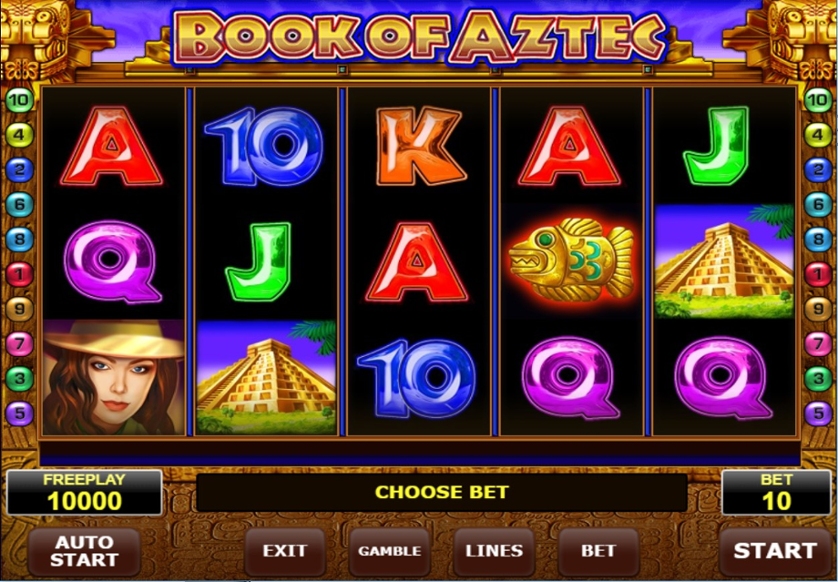
The best-known Amatic slot is almost certainly Book of Aztec, the studio's entry into the perennially popular book-of genre. Like the archetype it draws from, it uses a single expanding special symbol during free spins, an Aztec explorer theme and a high-variance profile that keeps chasers engaged. It has become one of the most-recognised titles in the Amatic library and a reliable performer across European and emerging-market operators. Its enduring popularity illustrates how effectively Amatic can take a well-understood format and execute it with the polish and pacing its audience expects. A companion title, Eye of Ra, works a similar Egyptian-adventure vein and appeals to the same audience, giving operators a natural pairing to merchandise together.
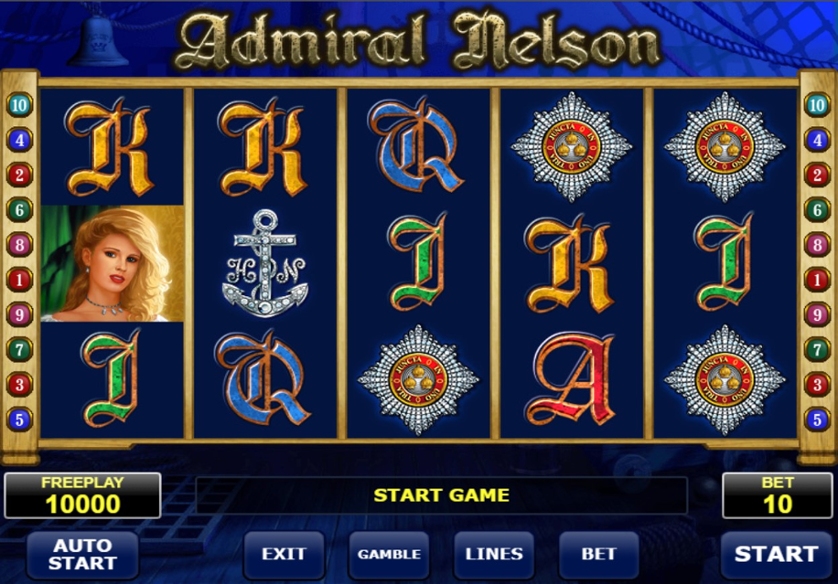
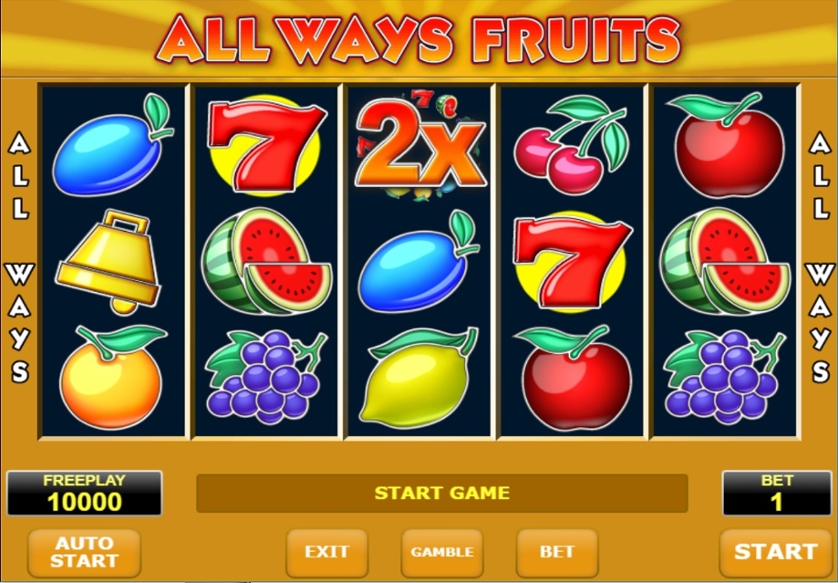
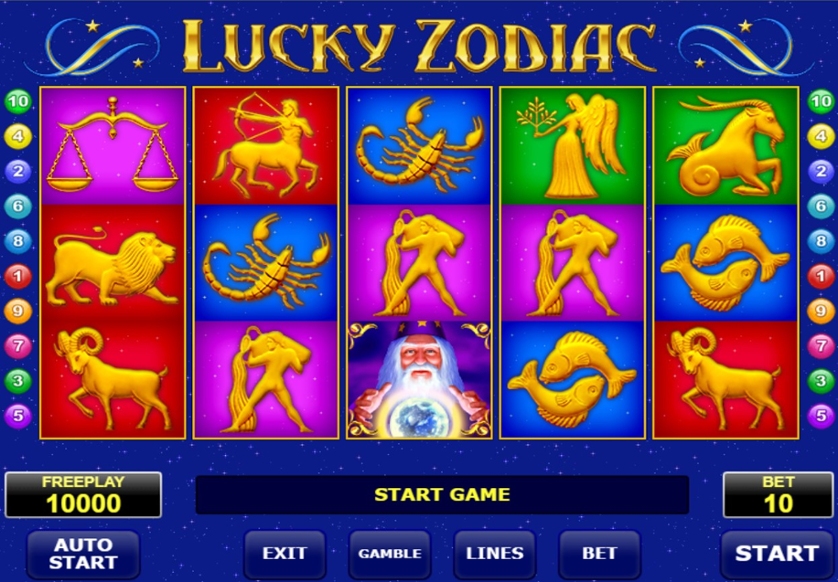
Admiral Nelson is another cornerstone, a naval-themed slot that leans on the studio's classic feature set and has a strong following in Central and Eastern European markets. Its maritime theme and dependable bonus structure make it a staple of many Amatic-powered lobbies. All Ways Fruits distils the Amatic ethos to its essence: a pure fruit machine with an all-ways-pays structure, no distracting narrative, just the clean loop of spinning, matching and gambling that the studio does so well. For the traditionalist player who wants the fruit-machine experience without embellishment, it is close to a definitive statement of what Amatic is about. Lucky Zodiac rounds out the flagship group with an astrology theme that has travelled well across cultures, tapping into the universal appeal of star signs and fortune.
What unites these titles is consistency of feel. A player who enjoys one Amatic slot can move to another and immediately understand the controls, the gamble, the bonus logic and the pace. For operators, that coherence makes the catalogue easy to merchandise: a themed Amatic lobby row or a fruit-slots collection can be assembled knowing the games will deliver a unified experience. It also makes cross-selling natural, because a player who has enjoyed Book of Aztec is primed to try Eye of Ra, and one who likes All Ways Fruits will recognise the appeal of the studio's other classic titles. That internal coherence is a quiet but real advantage of carrying a studio with a strong house identity.
Amatic's commercial strength is concentrated where its land-based heritage resonates. Central and Eastern Europe, the Balkans, the German-speaking markets and a spread of Latin American and emerging territories all contain sizeable populations of players who came to online gaming from physical machines. For those players, an Amatic slot is not a novelty but a continuation of something they already trust, and that trust converts into engagement and retention. In markets where players are still transitioning from the arcade and the casino floor to the phone screen, that sense of continuity is a powerful retention tool that flashier but less familiar content cannot easily replicate.
The catalogue's breadth of language support underlines this positioning. With versions available in a large number of languages, Amatic content can be localised for a wide range of audiences without additional development, which suits operators running multi-market or white-label estates. The games are built in HTML5 and run comfortably across desktop and mobile, so the same title serves a player on a phone in a café and one on a laptop at home without compromise. For an operator managing several brands across different territories, that combination of deep localisation and cross-device consistency reduces the operational cost of serving a diverse player base.
There is also a demographic dimension worth noting. The classic, accessible style of Amatic content tends to appeal strongly to older and more traditional players, a segment that is valuable precisely because it is often underserved by studios chasing younger, trend-driven audiences. An operator who wants to hold the attention of that demographic needs content that speaks its language, and Amatic supplies exactly that. In a lobby dominated by high-feature modern slots, a well-curated Amatic row can be the thing that keeps an entire cohort of players engaged.
It would be inaccurate to position Amatic as a cutting-edge mechanics innovator competing with the newest crash or feature-buy studios; that is not the lane it occupies, and pretending otherwise would misrepresent the catalogue. Its value lies in dependable, classically styled content with proven land-based pedigree, and in a catalogue deep enough to fill the classic-slots and fruit-slots segments of a lobby that many operators struggle to serve well. Players looking for exactly that experience are underserved by studios chasing the latest trend, and Amatic fills the gap with a coherence and authenticity that are difficult to fake.
For an operator, Amatic is less a single product decision than a building block in a broader lobby strategy. Every well-constructed casino needs a classic-slots and fruit-machine layer, and it is a layer that is surprisingly easy to get wrong. Fill it with generic, low-effort content and traditional players notice immediately; leave it thin and you cede an entire demographic to competitors who take it seriously. Amatic solves that problem with a catalogue that is authentically classic rather than a modern studio's approximation of the style, and that authenticity reads clearly to the players who care most about it.
Practically, that means an operator can use Amatic to anchor a dedicated classic or fruit-slots section of the lobby, confident that the games will deliver a coherent, recognisable experience. Because the titles share a house style, they cross-sell naturally within that section, and because they carry genuine land-based pedigree, they lend the whole shelf a credibility that generic filler content cannot. A player who arrives looking for the fruit-machine experience finds a real one, stays longer and is more likely to return, which is exactly the retention outcome that makes the classic layer worth investing in.
There is also a segmentation logic at work. The players who gravitate to Amatic content, often older, often coming from a land-based background, frequently behave differently from the younger, feature-hunting audience that dominates the modern-slots and instant-game shelves. They tend to value familiarity, session comfort and the simple satisfaction of the gamble feature over novelty and complexity. Serving that segment well requires content built specifically for it, and an operator that neglects it is effectively choosing to serve only part of its potential market. Amatic gives you the tools to serve the whole of it.
Consider how this plays out across a multi-brand or multi-market estate. In territories where land-based gaming culture runs deep, the Amatic layer might be a headline part of the lobby; in others it might be a smaller but still important complement to a more modern-leaning offer. Either way, the same catalogue serves both cases, localised into the relevant languages and deployed through the same SoftVault connection, so an operator can tune the prominence of classic content by market without managing separate supplier relationships. That flexibility is precisely what makes Amatic a strategic asset rather than a one-off addition.
None of this requires the operator to bet the business on classic slots. Amatic's role is complementary: it deepens the part of the lobby that many platforms underserve, without displacing the modern slots, live content or instant games that sit alongside it. In a well-balanced casino, Amatic is the studio that makes the classic shelf genuinely good rather than merely present, and because it comes through SoftVault, adding that depth costs nothing in operational complexity. The result is a lobby that speaks to a broader range of players, and a classic layer that earns its place rather than simply filling space.
Two structural trends work in Amatic's favour on modern platforms. The first is the growth of crypto-accepting casinos, many of which serve international and emerging-market audiences that overlap closely with Amatic's traditional strongholds. The second is the continued migration of land-based players to online play in exactly those territories. A classic, accessible, well-localised catalogue is well suited to both, and SoftVault makes it trivial to deploy across whatever payment rails an operator chooses to run.
Through SoftVault the Amatic library is crypto-ready from the moment it is switched on, so operators running Bitcoin, stablecoin or other digital-asset wallets can offer these slots without any additional payments engineering. The same content serves fiat and crypto players from a single deployment, which means an operator does not have to make a strategic choice between audiences; it can serve both with one catalogue. Because everything runs through SoftVault's single integration, adding Amatic does not mean a new contract, a new certification cycle or a new reconciliation process.
The content is included in the standard 14-day launch, and every euro or coin of gross gaming revenue it produces appears on the same consolidated GGR statement as the rest of your providers. That single-statement reporting is more than an accounting convenience; it removes an entire category of operational friction that would otherwise accompany a direct studio relationship, from separate invoicing to independent reconciliation to distinct technical support channels. For an operator building a lobby that must serve both crypto-native and traditionally-minded players, Amatic through SoftVault is one of the simplest ways to deepen the classic-slots offering without adding operational weight. You gain three decades of Austrian gaming heritage and a proven, floor-tested catalogue, delivered on the same terms, the same timeline and the same statement as everything else you run.
The wider point is that Amatic's value and SoftVault's delivery model reinforce each other. Amatic offers content whose appeal is rooted in familiarity and trust, qualities that take years to build and cannot be faked, while SoftVault offers a way to add that content with none of the commercial or technical overhead that would normally accompany a studio of its standing. Neither the heritage nor the frictionless delivery would be as valuable in isolation; together they let an operator strengthen an important and often-neglected part of the lobby with a single decision. For any platform that wants its classic-slots shelf to be genuinely good rather than merely present, and that would rather spend its energy on players than on supplier paperwork, Amatic through SoftVault is about as straightforward and low-risk an addition as the market offers, available from launch and reconciled on the same statement as everything else you run.
Amatic gives your lobby a genuine classic-slots and fruit-machine backbone with real land-based pedigree, and SoftVault makes it effortless to run:
Adding Amatic Industries through SoftVault requires nothing beyond your existing SoftVault connection. Because the studio's catalogue sits inside SoftVault's aggregation layer, you do not sign a direct contract with Amatic, run a separate technical integration or manage a distinct game-launch protocol. One API, one certification footprint and one set of credentials cover Amatic alongside every other studio in the SoftVault library.
Operationally, Amatic titles are enabled the same way any SoftVault content is: you select the games you want in your back office, configure availability by market and currency, and publish them to your lobby. The games are HTML5 and render across desktop and mobile automatically, and they inherit SoftVault's crypto-ready wallet support, so digital-asset and fiat players receive an identical experience without additional engineering.
Financially, everything flows into one place. Amatic's gross gaming revenue is reported on the same consolidated GGR statement as the rest of your SoftVault providers, eliminating the reconciliation overhead of a standalone studio deal. For most operators the practical effect is that Amatic is simply present from launch, ready to switch on within the standard 14-day timeline, with no incremental commercial or technical project attached.
Amatic Industries is an Austrian gaming company founded in 1993. It began as a manufacturer of land-based gaming machines and multi-game cabinets for European markets, and later brought its most popular titles online as HTML5 slots that preserve the classic casino-floor feel.
Amatic specialises in classic and fruit-style video slots with an old-school European sensibility: bold symbols, straightforward paylines, a signature card gamble feature and generous free-spin rounds. Its best-known titles include Book of Aztec, Admiral Nelson and All Ways Fruits.
Yes. The full Amatic online catalogue is available through SoftVault's single aggregation integration. There is no separate contract with Amatic and no bespoke technical work; the content is included in SoftVault's standard 14-day launch.
It is. Amatic titles inherit SoftVault's crypto-ready wallet support, so operators running Bitcoin, stablecoin or other digital-asset payments can offer the games to those players with no additional integration work, alongside standard fiat play.
Amatic performs strongly in Central and Eastern Europe, the Balkans, German-speaking Europe, Latin America and a range of emerging markets where land-based gaming culture is well established and players value familiar, accessible slot mechanics.
All Amatic gross gaming revenue appears on the same consolidated GGR statement as every other provider you run through SoftVault, so there is no separate reconciliation, wallet or reporting silo to manage.