.svg)

Turbo Games is a modern, provably-fair studio built for the crash and instant-game era. Since 2020 it has shipped a steady stream of fast, session-friendly titles, from crash and mines to plinko and ladder-style games, all designed around the short, high-tempo loops that dominate crypto casinos and a new generation of mobile-first players.
Through SoftVault, the entire Turbo Games catalogue is available under a single aggregation integration. There is no separate studio contract, no bespoke technical build and no additional wallet to reconcile. Turbo Games content is included in SoftVault's standard 14-day launch, is crypto-ready by design, and settles on one consolidated GGR statement alongside every other provider you run.
Turbo Games belongs to the wave of studios that redefined what an online casino game could be. Where the traditional industry spent decades refining the reel-based slot, Turbo Games looked at how a younger, crypto-native, mobile-first audience actually wanted to play and built its catalogue around that behaviour: fast rounds, transparent maths, one clear decision per game and results a player can verify for themselves. Founded in 2020, it moved quickly to establish itself in the crash and instant-game category, shipping new titles at a rapid cadence and building a partner network that now spans hundreds of brands across a large number of countries.
The studio's identity is inseparable from the idea of provable fairness. Every round in a Turbo Games title is committed to a cryptographic seed before it begins, so the outcome cannot be altered after the fact, and players can independently verify that the result was determined honestly. For the crypto-casino audience in particular, that transparency is not a nice-to-have but a baseline expectation, and it is one of the reasons Turbo Games has found such a natural home on digital-asset platforms. Through SoftVault, the whole catalogue is available with none of the integration overhead that would normally accompany a specialist studio, which matters because instant-game shelves reward freshness and breadth. Turbo Games is, in short, a purpose-built answer to a question the traditional slots industry was never designed to address: how to serve the fast, transparent, mobile-first style of play that a whole generation of players now expects, and how to keep serving it as their appetite for new content continually renews. Understanding how the studio approaches that question is the key to understanding why it has become such a fixture of the modern crypto lobby.
To understand Turbo Games you have to understand the game category it was built for. The crash game, in which a multiplier climbs from 1x and can crash at any moment, forcing the player to decide when to cash out, arrived in the online market and rapidly became a phenomenon, especially in crypto and emerging-market channels. It stripped the casino experience down to a single, tense, endlessly repeatable decision, and it did so with maths that could be made fully transparent. This combination of simplicity and verifiability was perfectly matched to an audience that had grown comfortable with cryptocurrency and was often sceptical of opaque, black-box gaming. Turbo Games launched into this environment with its own crash title and never looked back, expanding outwards from crash into the wider universe of instant and arcade-style games that share its DNA.
The studio has maintained an aggressive release schedule, adding new titles month after month, which keeps its catalogue fresh in a category where novelty drives engagement. That cadence matters commercially: instant-game players cycle through titles quickly, often trying something new the moment it appears, and an operator wants a partner that keeps supplying new hooks rather than resting on a single hit. Turbo Games has built its whole operating model around that reality, treating a steady drumbeat of releases as a core product rather than an occasional bonus.
That release discipline also reflects a broader philosophy about how the modern casino works. In the crash and instant-game world, the lobby is less a fixed shelf of evergreen titles and more a living feed of content that players expect to refresh. A studio that understands this designs its pipeline accordingly, and Turbo Games has done exactly that, positioning itself as a reliable engine of new instant-game content rather than the custodian of a handful of legacy titles. For operators, that means the shelf a player sees this month is not the shelf they saw last month, which is precisely what keeps a fast-moving audience coming back.
Turbo Games' catalogue is unified by a design language of speed, clarity and verifiable fairness. The games are deliberately simple to understand and quick to play, with a single core decision at their heart, and they are built to feel equally at home on a phone screen and a desktop. This is not simplicity born of limitation but of focus: by stripping away everything that is not essential, the studio produces games that a new player can grasp in seconds and an experienced one can play at high volume without fatigue. The mechanics span the recognisable instant-game archetypes:
What ties them together is provable fairness. Because every outcome is cryptographically committed before the round, players can audit results, and this transparency is a core part of the studio's pitch. It suits the sensibilities of crypto players who are accustomed to on-chain verification and who are often sceptical of black-box gaming. For this audience, the ability to check a result is not a technical curiosity but a fundamental part of the trust relationship, and Turbo Games has made it a defining feature rather than a footnote.
The games are also engineered for very high session frequency. Because a single round can last only seconds, players commonly rack up large numbers of rounds in a single sitting, which is exactly the engagement profile that makes the category so sticky. That high-frequency loop has important implications for operators: it drives strong session depth and gives the content a different, complementary rhythm to the slower cadence of reel-based slots. A lobby that pairs traditional slots with a deep instant-game shelf can serve two quite different modes of play, and Turbo Games is built to own the faster of the two.
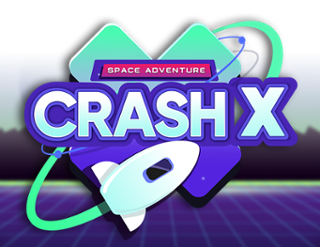
The studio's signature title is its crash game, Crash X, the release that established its reputation in the category and remains a reference point for what a modern, provably-fair crash game should feel like. It distils the format to its essence: a climbing multiplier, a single cash-out decision and transparent maths, wrapped in clean, fast presentation. Crash X demonstrated that Turbo Games understood not just the mechanic but the whole experience around it, from the pace of the rounds to the clarity of the interface, and it set the template the studio has built on ever since.
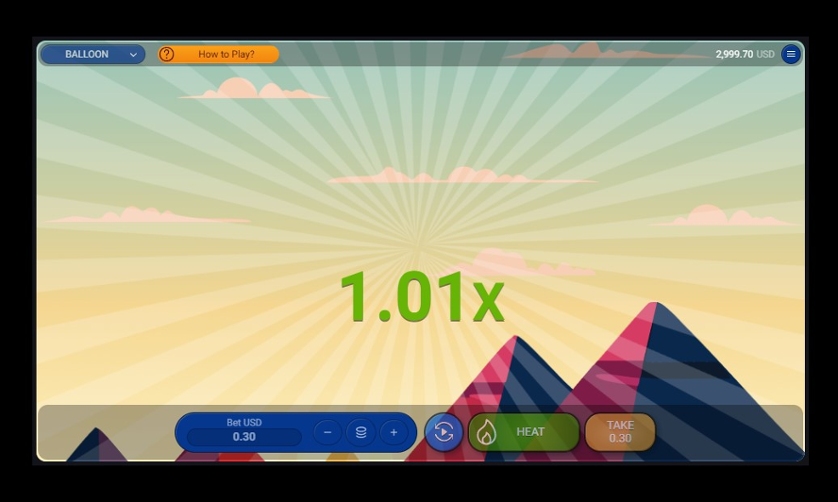
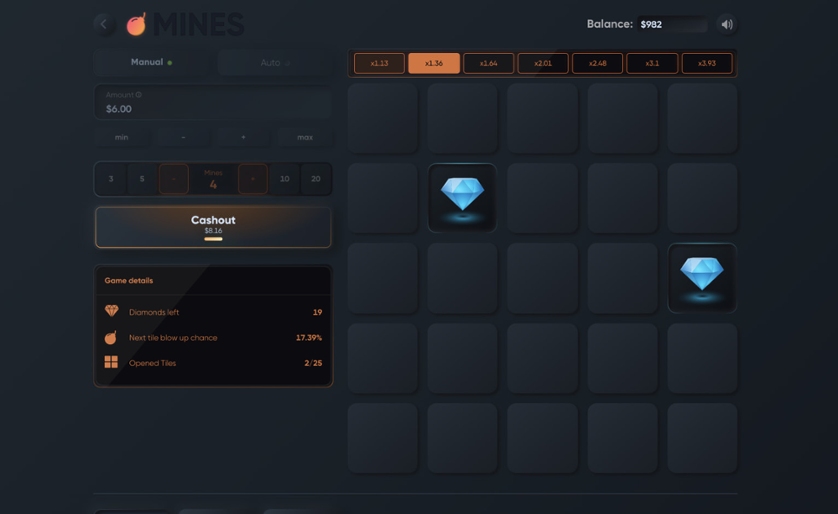
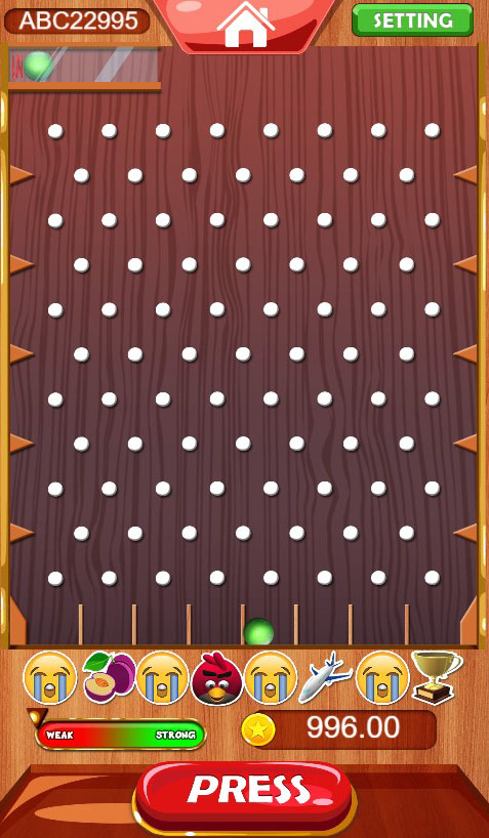
Balloon is another standout, a pump-and-cash-out game in which an inflating balloon can pop at any moment, applying the crash logic to a more playful, instantly legible visual metaphor that has proven especially popular with newer players. The balloon is a brilliant piece of design precisely because it needs no explanation: everyone understands that a balloon can burst, and that intuition maps perfectly onto the cash-out-before-it-goes mechanic. Mines brings the grid-reveal mechanic that has become a staple of the instant-game shelf, letting players tune their own risk by choosing how many tiles to uncover and how far to push before banking. Plinko delivers the endlessly satisfying ball-drop loop with configurable risk levels, giving players control over how volatile their session feels, and Aero offers another take on the flight-and-crash format that the category has embraced.
Across all of them the studio's priorities are consistent: fast, fair, mobile-first and easy to grasp within seconds. That consistency gives the catalogue a recognisable identity, so a player who enjoys one Turbo Games title is primed to try the next, and it makes the content easy for operators to merchandise as a coherent instant-game collection. It also means the studio can extend its brand into new formats without confusing its audience, because the underlying promise, transparent maths and a single clear decision, stays the same no matter what the wrapper looks like.
Turbo Games' commercial strength is concentrated exactly where the crash and instant-game category thrives: crypto casinos, emerging markets and mobile-first audiences. The studio reports a partner network spanning hundreds of brands and availability across a very large number of countries, reflecting how portable this content is. Instant games translate across cultures and languages far more easily than narrative-heavy slots, because the core loop needs almost no explanation, and Turbo Games has leaned into that universality with broad language support and a design ethos that assumes a global, mobile audience. A crash game is understood the same way in Lagos, Manila and São Paulo, which is precisely why the format has spread so rapidly across emerging markets.
This portability is a genuine structural advantage. A narrative slot built around a specific cultural reference may need localisation, reskinning or outright replacement to work in a new market, but a crash or mines game travels almost unchanged. That lowers the cost of expansion for operators and makes Turbo Games content unusually efficient to deploy across a diverse, multi-market estate. For an aggregator-backed operator serving players across many territories from a single platform, that efficiency compounds.
The studio has also invested in the regulatory groundwork that lets operators run its content in more demanding environments, holding a Malta licence and Romanian ONJN approval, and completing the RGS and RNG certification required for the newly regulated Brazilian market. That mix, a crypto-native design sensibility combined with real regulated-market credentials, is unusual among instant-game specialists and widens the range of operators who can deploy the catalogue confidently. Brazil in particular is a significant prize, and having the certification in place positions Turbo Games to serve operators pursuing that fast-growing market from day one.
It is fair to characterise Turbo Games as a specialist rather than a full-line studio. Its focus is the crash and instant-game category, and that is where it excels; operators looking to fill that fast-growing shelf will find a deep, constantly refreshed and provably-fair catalogue, while those wanting classic reel slots will look elsewhere. Given how quickly the instant-game segment has grown, and how strongly it indexes to crypto and emerging-market players, that specialisation is a strength rather than a limitation for the operators it serves. In a well-built modern lobby, Turbo Games is not competing with the slot studios; it is completing the offer they cannot.
To appreciate what Turbo Games brings, it helps to step back and consider why the instant-game shelf has become so important to modern operators in the first place. For most of the industry's history, the online casino was essentially a digital slot hall, with table games and a live-casino section added over time. The crash and instant-game category changed that by introducing a fundamentally different rhythm of play: rounds measured in seconds, a single active decision, and an experience that feels closer to a fast mobile game than a traditional slot. That difference is precisely why the category has grown so quickly, because it reaches players who were never fully served by the reel-based model.
Those players skew younger, more mobile-first and more crypto-comfortable than the traditional slots audience, and they behave differently once they arrive. They value speed, transparency and the ability to make an active choice rather than passively spinning, and they cycle through content quickly, always looking for the next hook. An operator that treats the instant-game shelf as an afterthought, stocking it with a handful of stale titles, effectively fails to serve this audience and leaves a fast-growing segment of the market to competitors who take it seriously. Turbo Games exists precisely to help operators take it seriously.
The studio's rapid release cadence is the key to that. Because the instant-game audience refreshes its interest so quickly, the shelf has to stay alive, and a partner that ships new titles month after month keeps it that way. Where a slots-only strategy might rely on a slow trickle of headline releases, an instant-game strategy depends on a steady, reliable flow of new content, and Turbo Games has built its whole operating model around supplying exactly that. For an operator, the practical effect is a shelf that never goes stale without any ongoing effort to keep it stocked.
There is also a portfolio-diversification argument. Relying entirely on slots concentrates an operator's revenue in a single style of play and a single kind of player; adding a strong instant-game shelf broadens both. Turbo Games content complements slots rather than cannibalising them, giving players a faster alternative for the moments when they want quick, high-tempo action, and giving the operator a second engine of engagement that runs on a different rhythm. In a market where player acquisition is expensive and retention is everything, having two distinct modes of play under one roof is a meaningful advantage.
Finally, the instant-game shelf is where the crypto and emerging-market opportunity is most concentrated, and Turbo Games is native to exactly that world. The players who are driving the growth of crypto casinos and the expansion of gaming in emerging markets are disproportionately the same players who love crash, mines and plinko. An operator building for those audiences cannot afford a weak instant-game offer, and Turbo Games, delivered through SoftVault with its provable-fairness intact and its release pipeline flowing automatically, gives that offer real depth from day one. The shelf that many operators still treat as secondary is, for the modern crypto-facing platform, arguably the most strategically important part of the lobby, and Turbo Games is one of the strongest ways to own it.
Turbo Games is, in many ways, the archetypal SoftVault studio: crypto-native, fast-moving and built for exactly the kind of modern, digital-asset-accepting operator that SoftVault is designed to serve. Through SoftVault the entire catalogue is crypto-ready by default, so operators running Bitcoin, stablecoin or other digital-asset wallets can offer these games with no additional payments work, and the provable-fairness layer that the crypto audience expects is preserved intact. That last point matters: the transparency that makes the games trustworthy to crypto players survives the aggregation, so nothing about the core value proposition is diluted in delivery.
Because everything comes through SoftVault's single aggregation integration, adding Turbo Games means no direct contract, no separate technical build and no independent reconciliation process. The catalogue is included in the standard 14-day launch, and its gross gaming revenue appears on the same consolidated GGR statement as every other provider. The studio's rapid release cadence is an asset here too: as Turbo Games ships new titles, they become available through the same connection, so an operator's instant-game shelf stays fresh without any repeated onboarding effort. In a category where freshness is a competitive lever, that automatic flow of new content is a meaningful advantage, and it comes at no incremental operational cost.
For a platform aiming to serve crypto and mobile-first players well, Turbo Games through SoftVault is one of the most natural additions available. You get a deep, provably-fair, constantly updated instant-game catalogue that maps precisely onto the fastest-growing segment of the modern market, delivered on the same terms, the same timeline and the same statement as everything else you run. There is no strategic reason to treat the instant-game shelf as a separate, harder-to-manage part of the platform, because through SoftVault it is simply another set of games you switch on, and Turbo Games gives you one of the strongest possible options to switch on first.
What makes the pairing particularly compelling is how neatly the studio's strengths and SoftVault's model align. Turbo Games' core advantages, its crypto-native design, its provable fairness and its relentless release cadence, are exactly the qualities that reward frictionless delivery, because they only pay off if operators can deploy the content easily and keep it fresh without effort. SoftVault provides precisely that: a single connection through which the whole catalogue arrives crypto-ready, and through which every new release surfaces automatically. An operator therefore captures the full benefit of a fast-moving, transparency-first studio without taking on any of the ongoing maintenance that a direct relationship would demand. In a segment where the winners will be the platforms that serve crypto and mobile-first players best, Turbo Games through SoftVault is one of the most efficient ways to build a genuinely competitive instant-game offer, live within the standard 14-day launch and reconciled on the same statement as everything else. As the boundary between crypto casinos and the mainstream online-gambling market continues to blur, the operators that have already built strong, provably-fair instant-game shelves will be the ones best positioned to capture the players moving between the two, and Turbo Games gives an operator a ready-made way to be one of them from the very first day the platform goes live.
Turbo Games gives your platform a deep, constantly refreshed crash and instant-game shelf built for crypto-era players, delivered through one SoftVault connection:
Adding Turbo Games through SoftVault needs nothing more than your existing SoftVault connection. Because the studio's catalogue lives inside SoftVault's aggregation layer, there is no direct contract with Turbo Games, no bespoke technical build and no separate certification project. One API, one integration footprint and one set of credentials cover Turbo Games alongside every other studio SoftVault carries, and the provably-fair mechanics that define the games are preserved end to end.
Enabling the content works exactly as it does for any SoftVault provider. You select the crash, mines, plinko and other instant titles you want from the back office, configure availability by market and currency, and publish them to your lobby. The games are HTML5 and mobile-first, rendering cleanly on phones and desktops, and they inherit SoftVault's crypto-ready wallet support so digital-asset and fiat players receive an identical, verifiable experience.
Financially and operationally, Turbo Games folds into what you already run. Its gross gaming revenue appears on the consolidated GGR statement covering all your SoftVault providers, and because the studio ships new titles frequently, those releases surface through the same connection without any repeat onboarding. In practice the catalogue is available within the standard 14-day launch and stays current on its own.
Turbo Games is a provably-fair game studio founded in 2020 that specialises in crash and instant games. Its catalogue includes crash, mines, plinko and arcade-style titles built for fast, mobile-first play, and it distributes to hundreds of partner brands across a large number of countries.
Provably fair means each round's outcome is committed to a cryptographic seed before the round begins, so the result cannot be changed afterwards and players can independently verify that it was determined honestly. It is a core expectation among crypto-casino players and a defining feature of Turbo Games content.
The studio's signature game is the crash title Crash X. Other popular releases include Balloon, Mines, Plinko and Aero, all built around fast rounds and a single clear cash-out or reveal decision.
Yes. The full Turbo Games catalogue is available through SoftVault's single aggregation integration, with no separate contract or bespoke build, and it is included in SoftVault's standard 14-day launch. New Turbo Games releases arrive through the same connection automatically.
It is crypto-ready by design. The games are built for digital-asset audiences and inherit SoftVault's crypto-ready wallet support, so operators running Bitcoin, stablecoin or other cryptocurrencies can offer them with no additional payments work, alongside fiat play.
All Turbo Games gross gaming revenue appears on the same consolidated GGR statement as every other provider you run through SoftVault, so there is no separate reconciliation, wallet or reporting silo to manage.